

I asked ChatGPT a question the other day:
“What’s stopping B2B teams from hitting their market expansion targets?”
It gave me the usual list: unclear strategy, tight budgets, poor market positioning.
Reasonable, but that’s not WHAT I SEE.
Most teams I work with already have a clear strategy and an approved budget. They know they need to publish content, reach out to prospects, and follow up consistently.
What’s missing is execution.
No one is responsible for doing the work, day after day. Your team is busy with clients and operations, so growth tasks get postponed indefinitely.
That’s exactly why the role of an Execution Service Partner (ESP) has emerged. Put simply, an ESP is the team you hire to execute your plan so yours doesn’t have to.
Keep reading to learn what an ESP actually does, why it’s a better solution than hiring or a traditional agency, and how to know if it’s right for you.
What Is an ESP (Execution Service Partner)?
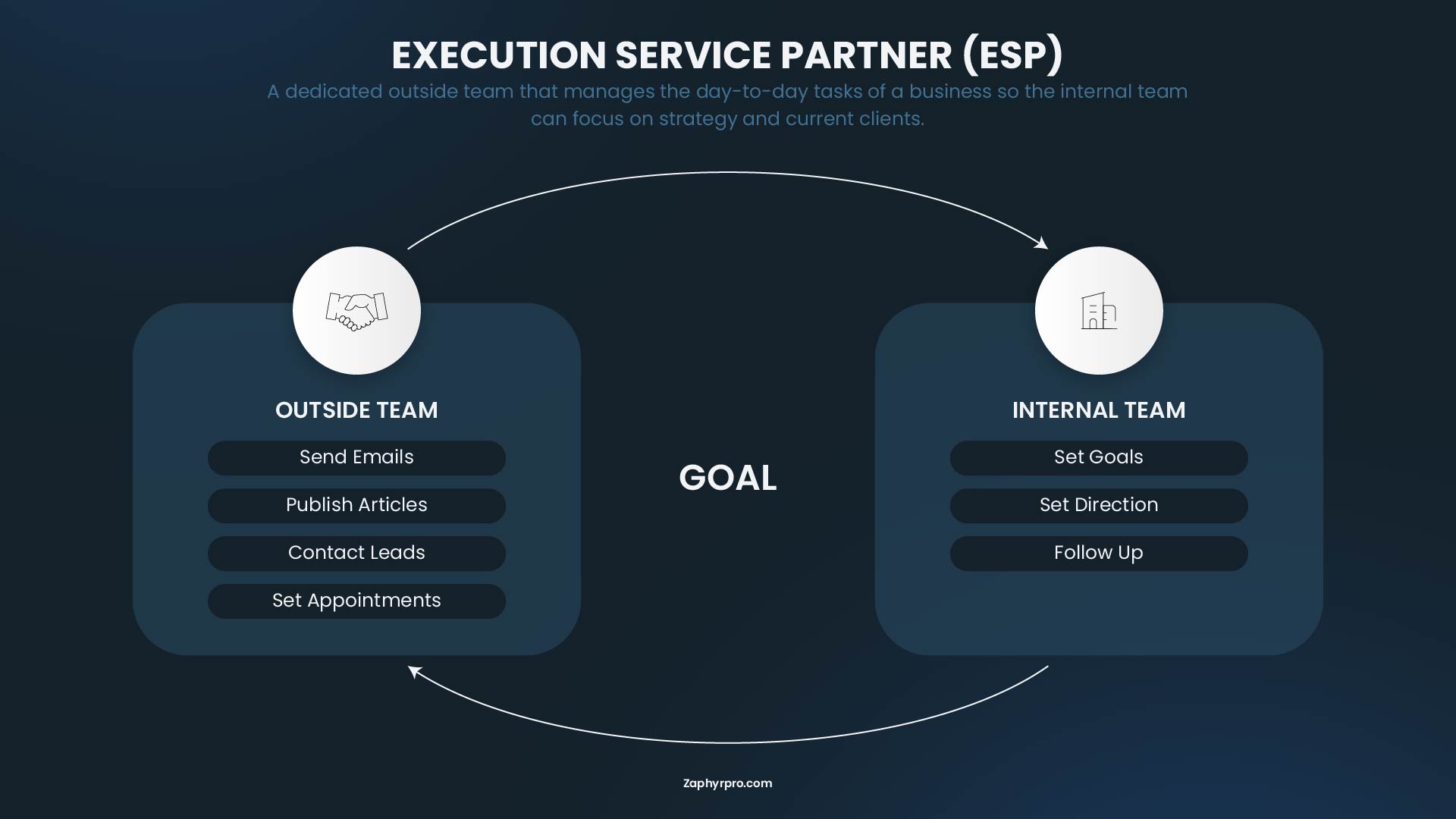
An Execution Service Partner (ESP) is a dedicated outside team hired to handle day-to-day execution. When your company wants to acquire new customers, it requires consistent work (like sending emails, publishing articles, and contacting leads). An ESP manages this ongoing, day-to-day execution so your internal team can focus on strategy and current clients.
How it works:
- Your team sets the goals, direction, and strategy.
- The ESP handles the daily tasks and activities needed to achieve those objectives.
For example, if your goal is to generate more qualified leads, your team decides who to target and what message to share. The ESP handles writing and sending the emails, tracking replies, and scheduling follow-up calls.
Is an Execution Service Partner Right for You?
You have a solid go-to-market roadmap. Your people are capable. But they’re also completely booked with client work and daily tasks, leaving little room for proactive outreach or new campaigns.
If you recognize these patterns, an execution service partner might be the solution:
- Promising leads go cold because follow-ups are slow or inconsistent.
- Your team works nights or weekends just to keep up with basic outreach.
- Launching new content or campaigns is constantly postponed.
- Sales data is scattered because no one has time to manage the CRM.
Sounds familiar? A 2025 industry survey found that over 53% of marketing leaders say their biggest obstacle to growth isn’t strategy, it’s having the bandwidth to implement it.
In other words, your organization might have the perfect expansion plan, but if there’s no one to actually do the work, you’re essentially running an expensive strategy charity. You can have the best ideas in the industry and still watch your opportunity pipeline stall because everyone is too busy to act.
How Does an ESP Differ from a Marketing Agency, Freelancer, or Full-Time Employee?
Most companies try to scale their growth by hiring a freelancer, engaging an agency, or bringing on a new employee. An Execution Service Partner is a fundamentally different model.
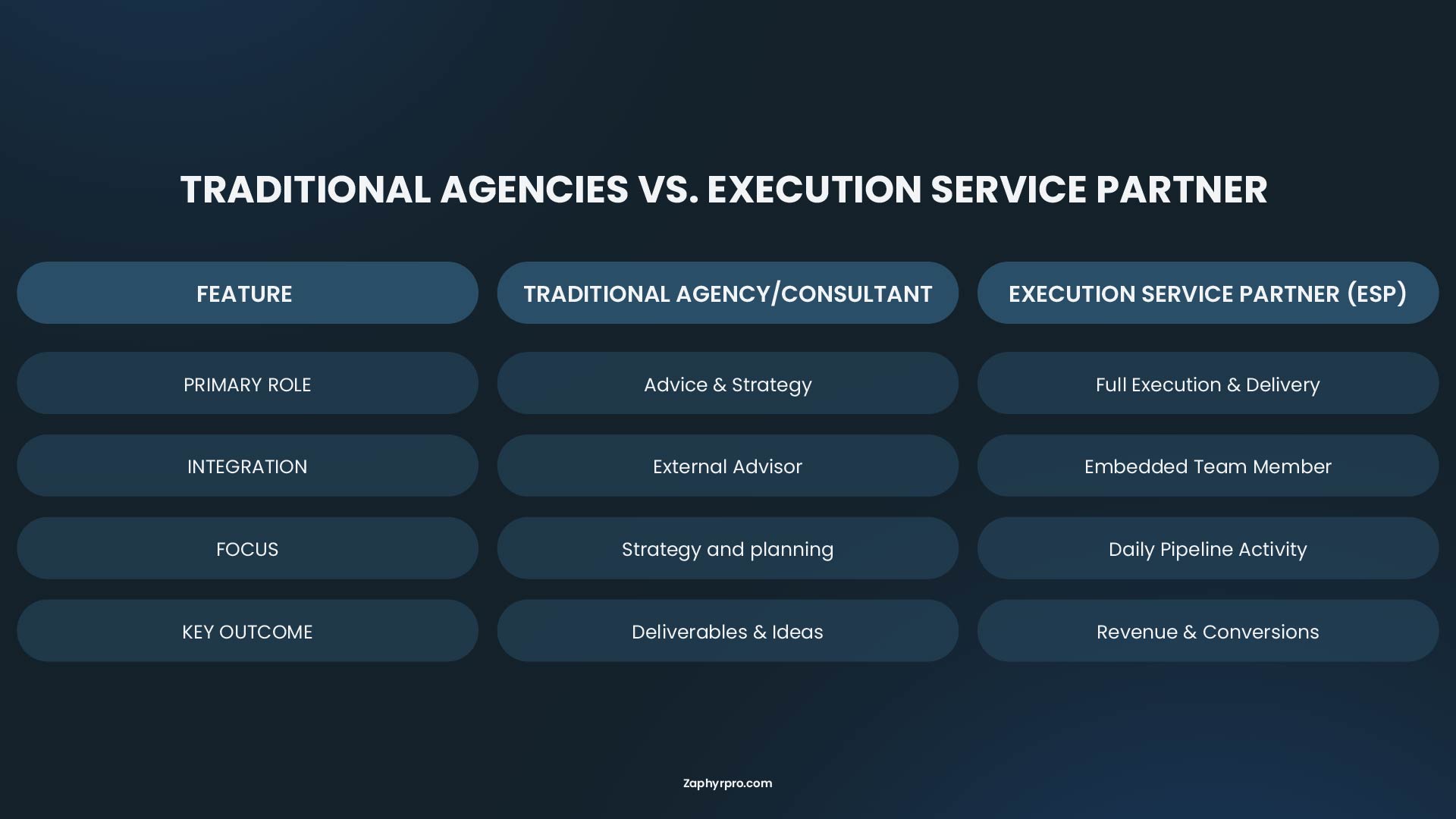
Here is how an ESP compares to the traditional options:
An ESP vs. a Marketing Agency
Agencies are typically project-based. They might run a specific ad campaign or redesign your website. Their role is often to strategize and then hand the plan back to you. An ESP is built for continuous, daily work. They don’t hand you a plan but they are the team that executes it, managing the ongoing tasks that fill your prospect funnel.
An ESP vs. a Freelancer
Freelancers are great for one-off tasks or specialized projects, but they usually work independently and may not align with your broader sales prospecting process. An ESP acts as a coordinated extension of your team, ensuring that outreach, content, and follow-ups work together toward the same goal.
An ESP vs. Hiring a Full-Time Employee (FTE)
Hiring someone new takes time, training, and management. An ESP acts like a ready-to-go part of your team from the beginning, without the long-term commitment or added overhead. You get the GTM layer execution support you need without adding to your management load.
7 Reasons B2B Teams Need an Execution Service Partner
Here are seven specific reasons why this model is becoming essential for B2B teams looking to grow without burning out their people:
1. Hiring Takes Too Long (And Costs Too Much)
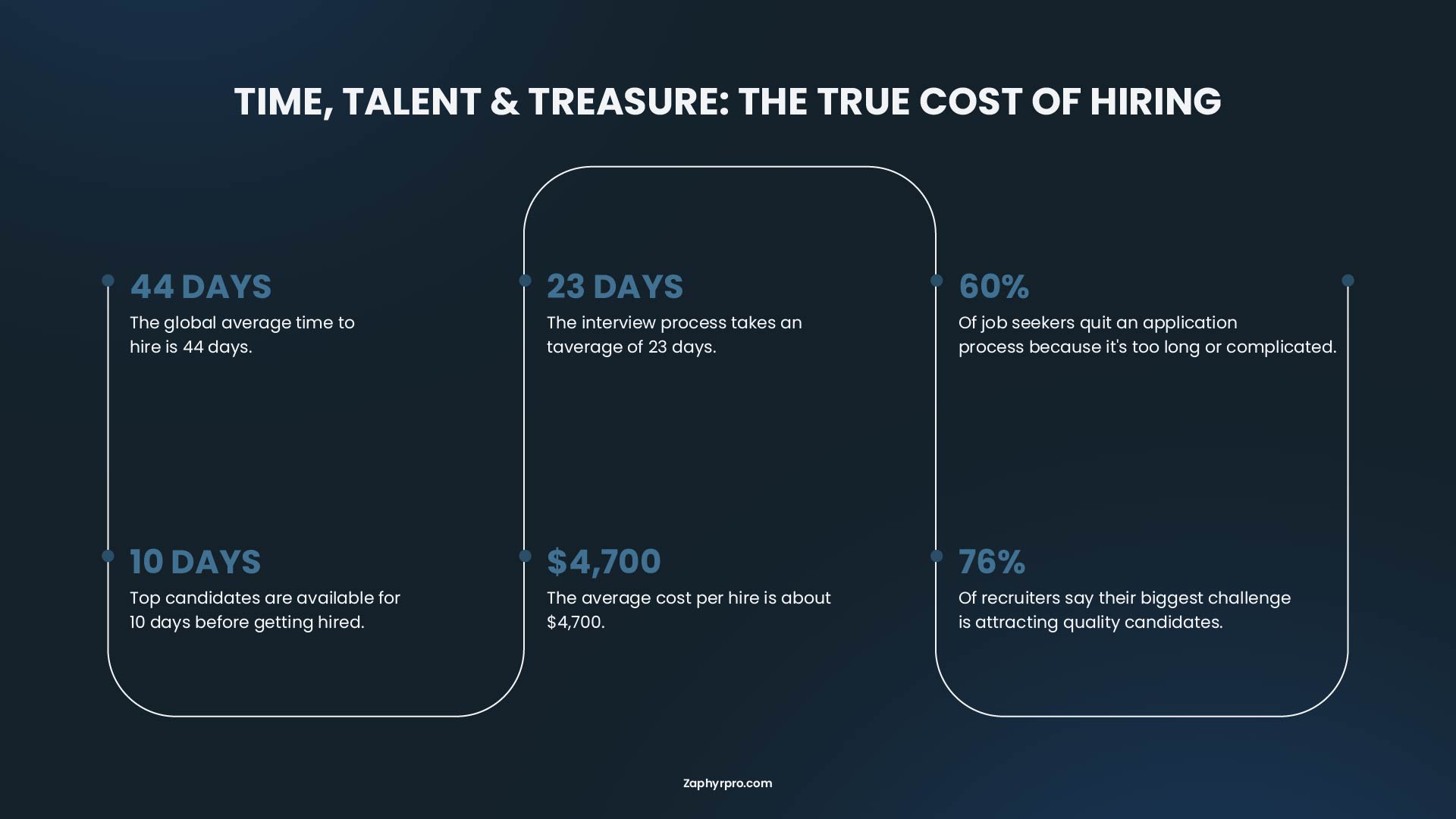
Hiring a marketing manager takes an average of 42 days to fill the role in 2026, and bringing on an SDR team takes about 36 days just to fill the role. On top of that, onboarding, training, and ramping up to full productivity can take another 60 to 90 days.
By the time a new hire is fully contributing, an entire quarter can be lost. There is also no guarantee they will stay long term or perform exactly as needed for your specific go-to-market goals.
Working with a B2B execution service partner can shorten this timeline significantly. Instead of waiting months, you can set up a team quickly, define the target customer, and start producing results right away. This allows your team to focus on outcomes instead of the delays and uncertainty of hiring.
2. Your Team Spends Too Much Time on Execution

How much time did you spend last week on tasks someone else could have handled? Updating the CRM, writing LinkedIn posts, chasing leads, formatting sales decks, scheduling calls, and building email campaigns are all important, but they are not where you create the most value as a leader.
Your focus should be on identifying the right markets, refining messaging, and deciding which channels to invest in. When you also take on execution work, you end up splitting your attention.
An execution team takes over operational duties. They handle content, campaigns, lead follow-up, and CRM management. This allows you to focus on strategy and direction, while ensuring the work is completed consistently and accurately.
3. Agencies Don't Own Your Outcomes
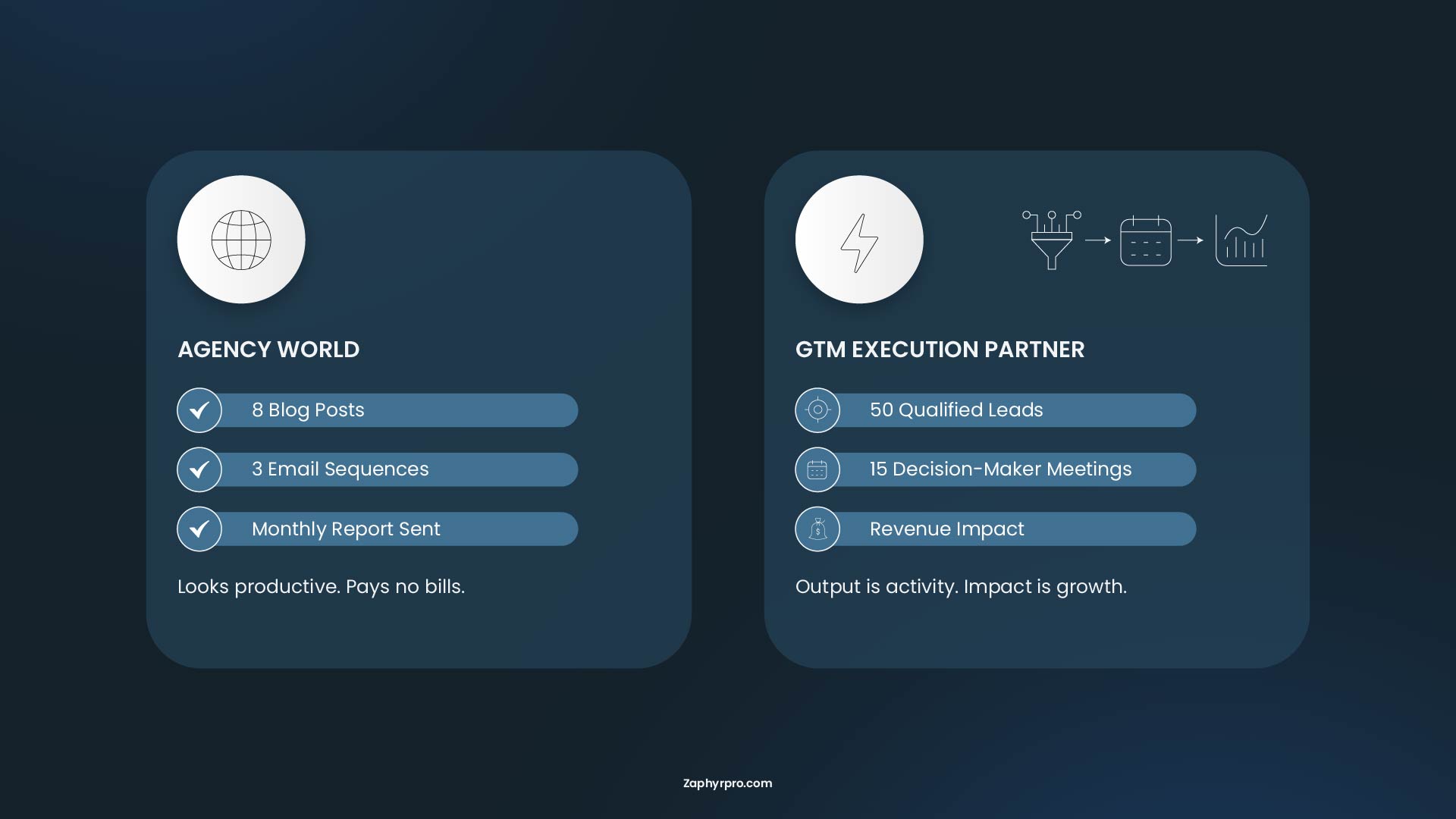
Most agencies work on a retainer model, billing by the hour, by project, or by month, regardless of whether your sales funnel goals are met. You pay for activities like “eight blog posts delivered” or “three email sequences created,” but no one is accountable for whether those activities actually drive revenue.
The incentive is misaligned from the start. Agencies get paid whether your campaigns succeed or fail, which often leads them to focus on deliverables that look good in a report rather than results that affect your business.
A GTM execution service partner will focus on outcomes, not just activities. Instead of promising deliverables like “eight blog posts and two LinkedIn campaigns,” they commit to results, such as “50 qualified leads and 15 booked meetings with decision-makers this quarter.” One measures output, the other measures impact.
4. You Need Multiple Skills, Not Just One
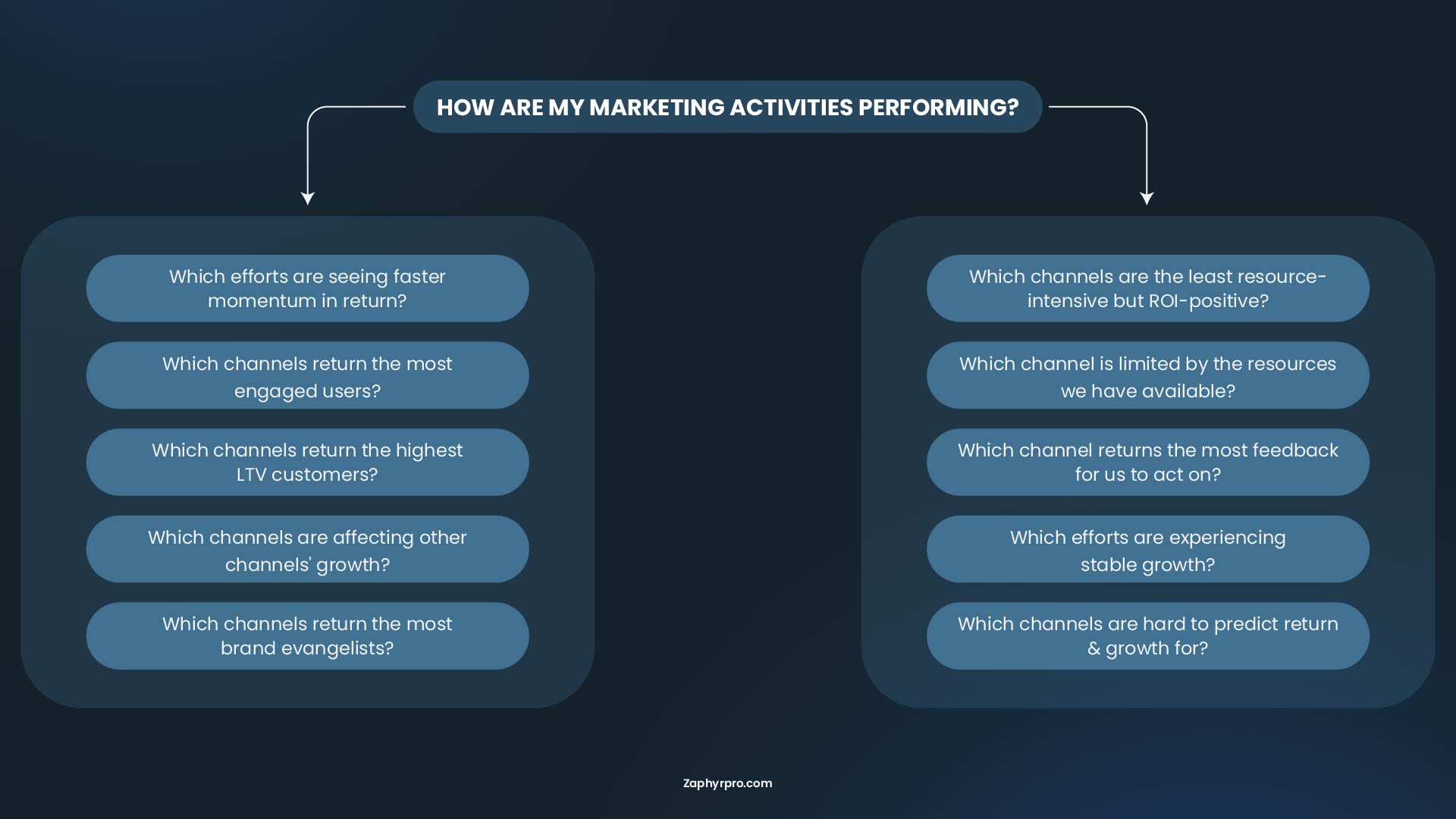
Effective marketing and sales requires a mix of skills: content to attract prospects, targeted prospecting to fill the pipeline, lead qualification to focus reps’ time, sales support to keep deals moving, and CRM management to keep data accurate. Hiring for each of these means multiple people, onboarding processes, and personalities to coordinate.
Often, specialists work in isolation. Content marketers may not communicate with SDRs, SDRs may not update the CRM consistently, and sales may be left out of the loop. That puts you in the middle, trying to connect the dots. Information gets lost, messaging becomes uneven, and opportunities get missed.
ESPs give you the full stack in one integrated team. Content and outreach campaigns and lead gen specialist and ops all moving in the same direction, all using the same messaging, and all optimizing toward the same goals. The content team knows what messaging the outbound team is using, the SDRs know what content is converting, and the ops team is tracking everything in real time and feeding insights back to both.
5. Scaling Up (and Down) Is Nearly Impossible
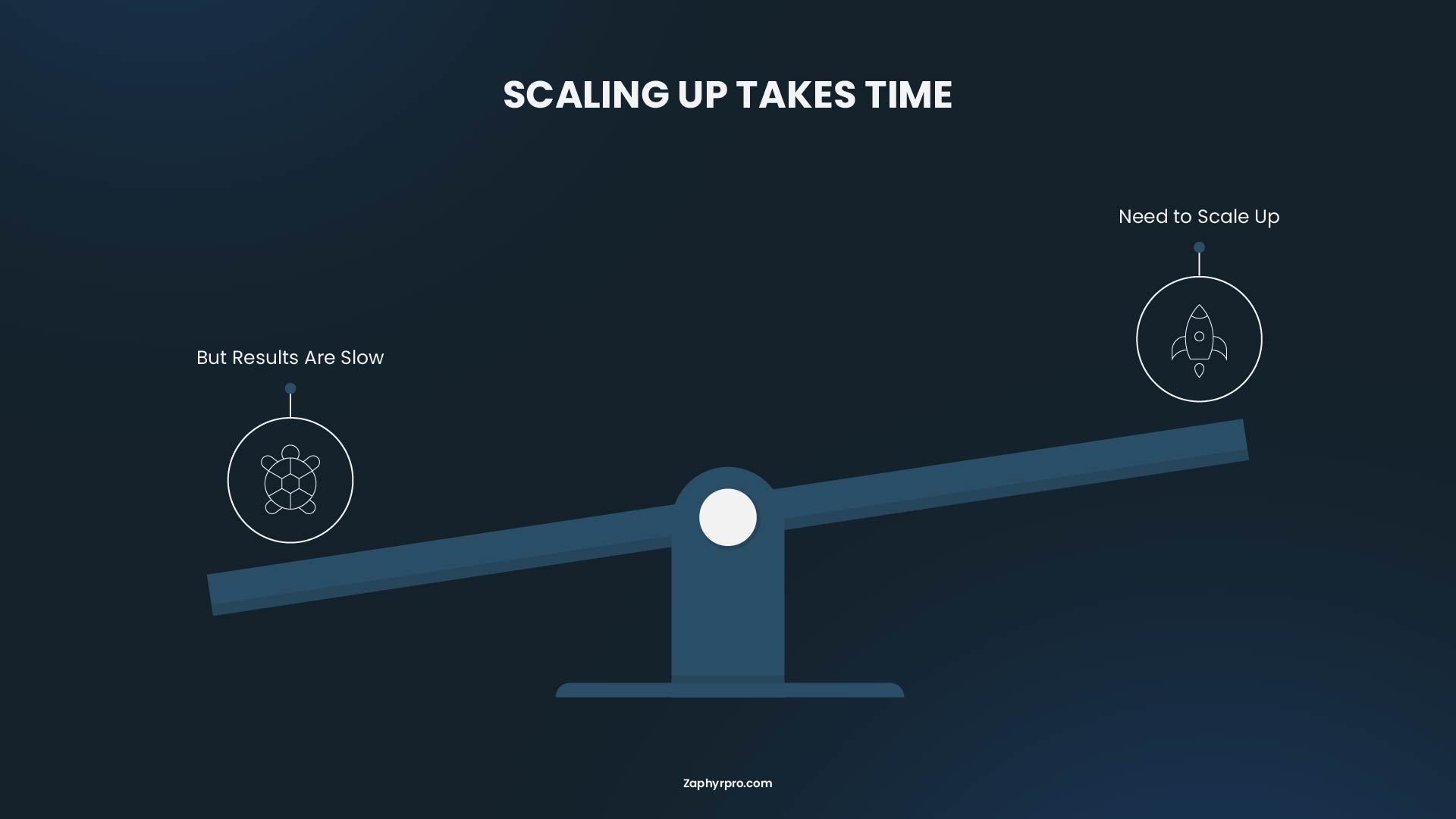
If you want to test a new market, launch a product, or ramp up your lead flow after a funding round, you can’t just hire a few SDRs for 90 days and let them go if it doesn’t work. Employment comes with salaries, benefits, and the internal disruption of layoffs.
Agencies aren’t much better because most lock you into long contracts with minimum commitments. You can’t easily scale down when priorities shift, and scaling up takes time too. They need to assign new team members, onboard them on your account, and ramp them up to speed before you see any impact.
ESPs give you the flexibility to scale on demand. Need to double your outbound capacity for a quarter? Done. Want to scale back while you retool your messaging? No problem. Testing a new vertical and not sure if it’ll work? Start small and expand if it does. No long-term contracts, no hiring commitments, and no awkward conversations about letting people go.
6. Quality Control Is a Challenge
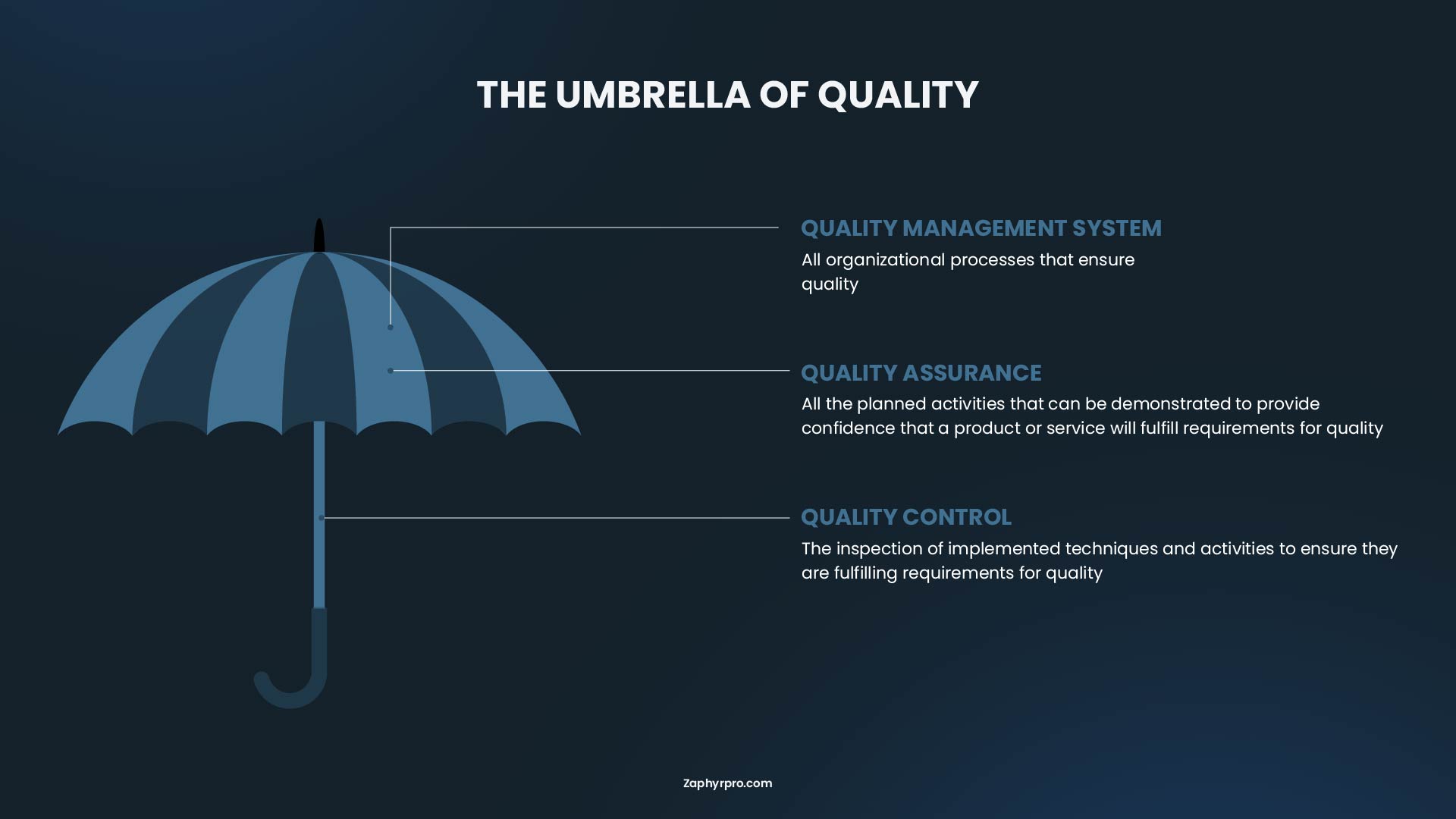
Execution quality varies wildly depending on who’s doing the work, and there’s no way to guarantee it when you’re hiring one person at a time. Hire a great SDR and your opportunity pipeline fills up with qualified meetings, but hire a mediocre one and you waste three months before figuring out they’re not able to manage it.
The same unpredictability exists with agencies where you might get assigned to their A-team or their junior staff, and with freelancers where skill levels range from exceptional to barely competent.
Embedded execution teams remove this risk by using proven systems. They know which email templates get responses, which lead qualification questions identify serious buyers, and which content formats convert. Every email is reviewed, every piece of content edited, and every lead qualified according to the same tested process.
7. Speed to Market Determines Who Wins
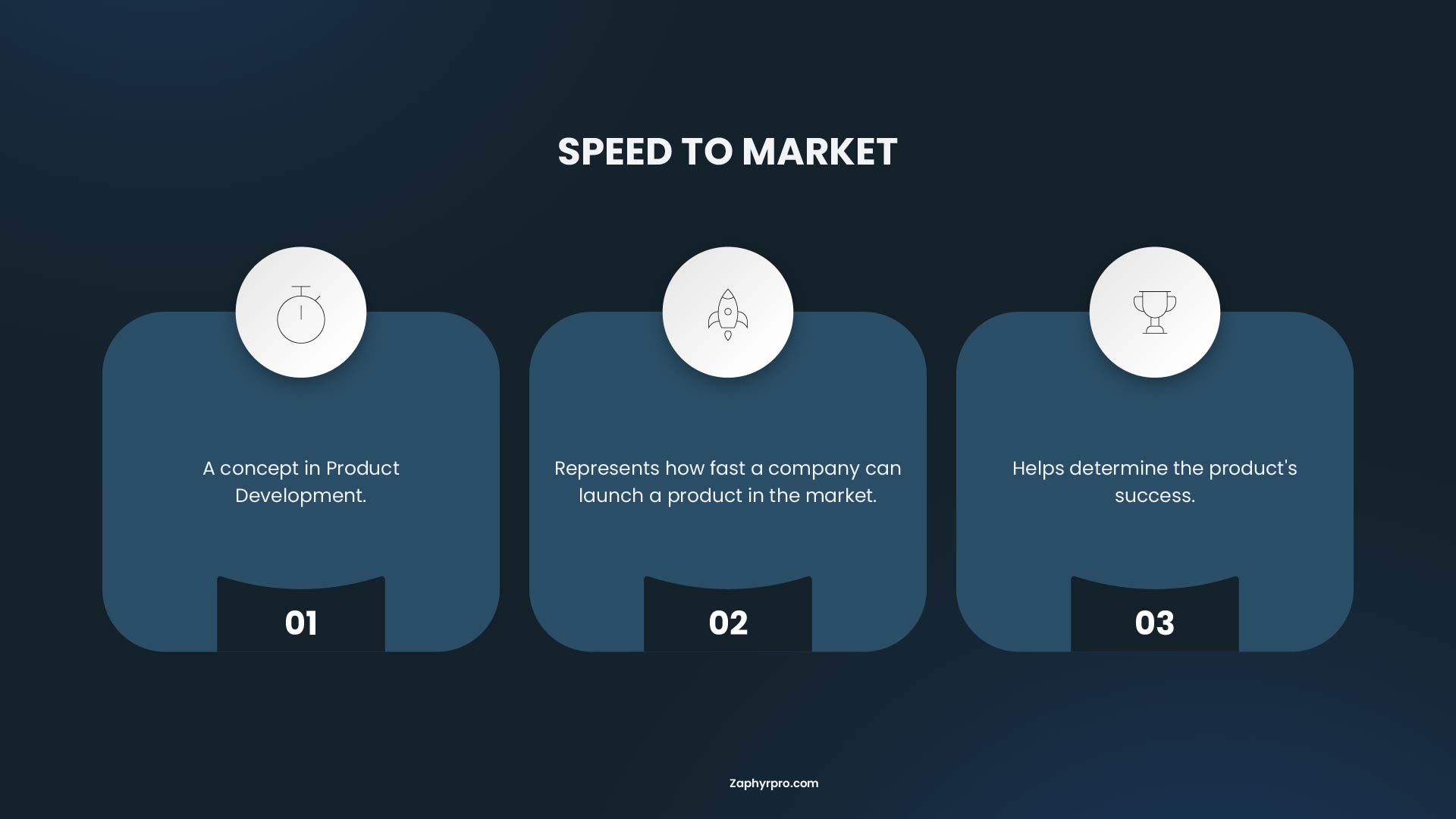
In B2B, the company that executes fastest usually wins the opportunity because market windows don’t stay open forever. A competitor launches a similar product, a regulatory change creates new buyer urgency, a funding round opens up the budget for new solutions, or economic conditions shift and buying behavior changes overnight.
If you’re stuck in a hiring cycle or waiting for an agency to ramp up while these windows open, you miss them entirely because your competitors move while you’re still trying to get resources in place.
Speed to market isn’t just about being first, it’s about being present when the opportunity is actually available. A prospect has a budget this quarter and needs a solution now. If you can’t respond with content, outreach, and follow-up immediately, they’ll go with whoever can.
Day-to-day execution partners shorten the timeline from decision to action. You can decide to ramp up outbound on Tuesday and have campaigns running, leads qualified, and meetings booked by Friday. With a typical 90-day results timeline, measurable pipeline impact shows within three months.
How to Choose the Right Execution Service Partner
Once you’ve decided an ESP might be a good fit, the next step is choosing the right one. This isn’t about finding the cheapest option, but the partner who will best integrate with your team and drive your growth. Here are the key factors to evaluate.
Industry Experience
Do they know your buyers? A qualified partner should understand your market, your customers’ challenges, and your competitors from the first conversation. Request case studies or examples of their work with similar companies to confirm they can connect with your audience.
Technology and Tools
Your ESP will need to work within your existing systems. Ask how they integrate with your CRM whether it’s HubSpot, Salesforce, or another platform. They should also be comfortable using your communication tools and analytics software to ensure a smooth workflow and transparent reporting.
Communication and Reporting
Clarity is non-negotiable. Ask about their standard reporting cadence: do they provide weekly updates? More importantly, look at what they report on. A strong partner focuses on outcome-based KPIs like meetings booked, qualified leads generated, and content engagement, not just activity metrics like emails sent.
Team Structure
Know who you’ll be working with. Will you have a dedicated account lead? Can you meet the specialists who will be writing your content or managing your outreach? Avoid partners where you feel like you’re handed off to a faceless team; direct access builds better collaboration.
Pricing and Transparency
Understand exactly how you’ll be charged. Is it a flat monthly retainer, or is it tied to specific outcomes? Transparent pricing and a contract that aligns their success with your growth are clear signs of a trustworthy partner.
Common Real-World Use Cases for an Execution Service Partner
To make this more concrete, an ESP becomes most valuable in situations where your team has a clear goal, but lacks the time or specialized focus to achieve it. Here are three specific, common scenarios where an ESP delivers immediate results.
Launching a New Product or Service
Your team has developed a new offering, but launching it requires a coordinated campaign: website copy, launch emails, outreach to your target list, and follow-up scheduling. An ESP handles all of this GTM execution, from creating the content to managing the launch sequence, so your company team can focus on the product itself and closing the first deals.
Pipeline Reactivation
Your CRM contains promising leads that have gone cold. Manually re-engaging them is a tedious, often overlooked task. An ESP combines email outreach with LinkedIn automation to run personalized nurture campaigns, keeping prospects engaged throughout the funnel. They refresh the messaging, sequence the outreach, and identify renewed interest, delivering warm leads directly to your sales team.
Establishing Authority in a New Market
You’re expanding into a new vertical or geographic region. Building credibility takes consistent, targeted content. An ESP can conduct the initial market research and then produce a steady stream of articles, reports, and social content tailored to that new audience. This builds your reputation as a knowledgeable leader before your sales team even makes the first call.
How to Start Your Growth Plan with Zaphyre
If you see your team in the situations we’ve described, you know what needs to be done. The next step is to start. Here is how you can begin working with us.
Step 1: The Alignment Call
We start with a conversation, not a contract. In a 30-60 minute call, we review your current operational roadmap, goals, and bottlenecks. This helps us understand your business and define what a successful partnership looks like for you.
Step 2: The 90-Day Roadmap
Based on our talk, we will build a clear proposal. It’s a detailed 90-day plan that outlines the specific work we’ll handle, the metrics we’ll track, and the expected outcomes. You’ll see exactly what you’re investing in and what you’ll get back.
Step 3: Rapid Integration & Launch
Once you approve, we get to work. We integrate with your tools (like your CRM) and team within a week. There’s no lengthy onboarding. We begin executing the first phase of your plan immediately, so you start seeing activity and results right away.
If your team has the plan but needs the people to execute it, we can start that work for you.
Learn More
Frequently Asked Questions
An ESP is an external team that handles the day-to-day execution of your strategy execution. They manage tasks like sending outreach emails, creating content, and following up with leads so your in-house team can focus on high-level planning and closing deals.
Agencies typically focus on strategy and short-term projects. An ESP is built for ongoing, daily execution. An agency might give you a marketing plan; an ESP is the team that actually implements that plan, week after week, and is measured by the results it drives, like leads and meetings.
Most ESPs use a flat monthly fee based on the scope of work, not hourly billing. You pay for a dedicated team and outcomes, not just for deliverables. This is often more cost-effective than hiring multiple full-time employees and avoids the long delays of recruiting and training.
Consider an ESP when you need to execute quickly like launching a product or entering a new market and can’t wait months to hire and train a team. It’s also ideal when your current team is too busy with clients to focus on proactive growth work.
You should expect a fully operational system for outreach and content, a consistent flow of new leads, and initial sales meetings booked with target accounts. A good ESP will work with you weekly to optimize based on what’s working.
A strong ESP integrates with your current stack, like your CRM (Salesforce, HubSpot), communication tools, and analytics. They act as an extension of your team, following your processes and brand guidelines to ensure a seamless workflow.
Yes. A key advantage of an ESP is flexibility. You can scale efforts up or down monthly based on goals, such as ramping up for a product launch or pausing to refine messaging, without the constraints of long-term contracts or hiring cycles.
ESPs use proven processes and close collaboration. This includes detailed briefings, editorial reviews for all content, approved message templates for outreach, and regular syncs to ensure every output aligns with your brand and standards.