

Sales have changed. Today, most people prefer to research solutions on their own rather than talk to a pushy salesperson. Because of this, the old “smile and dial” approach no longer works.
However, someone still needs to start conversations with potential customers and ensure that the leads reaching your sales team are ready to buy. This is the role of a specialist called a sales development representative, or SDR.
If you’ve heard the term but aren’t sure what an SDR does, or if you’re considering a career in this field, you’re in the right place.
By the end of this guide, you’ll understand the important role sales development representatives play in 2026 and how they help drive the growth of a successful SDR team.
What is a Sales Development Representative (SDR)?

A Sales Development Representative (SDR) specializes in sales prospecting whose primary job is to initiate the first conversation with a potential customer and determine if they are a good fit to become a paying client.
In other words:
While marketing attracts an audience, the sales development representative role is to proactively reach out, start a dialogue, and qualify which leads are genuinely interested and have a need your company can solve. Their success is measured by the number of qualified sales meetings or opportunities they create for the Account Executives (AEs) who then close the deal.
What Does a Sales Development Representative Do?
SDRs ensure your closers only spend time on leads who are actually interested. It’s a critical role because, according to a widely cited Harvard Business Review study, Companies that contact leads within 1 hour are 7x more likely to have a meaningful conversation with a decision-maker (compared to waiting even one more hour), and up to 60x more likely to qualify the lead than those waiting 24+ hours. The SDR’s job is to make sure that the critical window never closes.

In practice, this means:
- Prospecting: Identifying potential customers using tools like LinkedIn Sales Navigator and CRM data.
- Outreach: Conducting personalized outreach via email, phone calls, and social media.
- Qualification: Using a framework like BANT (Budget, Authority, Need, Timeline) to assess a lead’s readiness to buy.
- Scheduling: Booking qualified meetings (demos, discovery calls) for Account Executives
CRM Management: Logging all activities and lead data accurately in systems like Salesforce or HubSpot.
Are SDRs Still in Demand? (The Data Says Yes)
With so much talk about automation and AI, it’s fair to ask: is the SDR role here to stay?
The short answer is yes, sales development representatives are still very much in demand.
But their role is evolving.
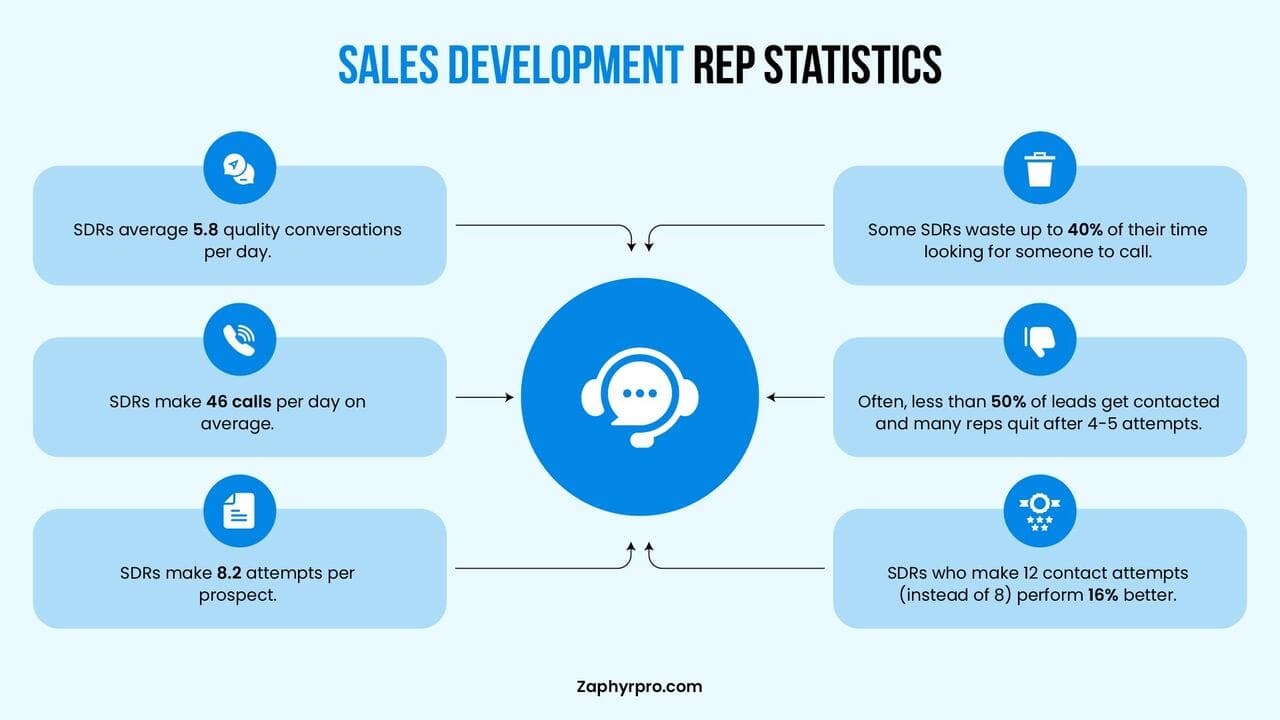
Buyers now do more research on their own. But when it’s time to make a choice, they still want to talk to a real person. An SDR is that person. They start the conversation and help the buyer take the next step.
Some tools called “AI SDRs” can help with simple tasks. They can find B2B sales leads or write first emails. But they cannot build trust or understand what a buyer really needs. That is why human SDRs are still essential. They use these tools to save time on routine work so they can do more listening, understanding, and guiding real people.
Human SDR vs. AI SDR: A Side-by-Side Look
It’s important to understand that AI SDRs are tools, not replacements. They work alongside human SDRs, each handling what they do best.
Here’s how they compare:
| Aspect | Human SDR | AI SDR Tool |
|---|---|---|
|
Main Role |
Starts real conversations, listens, and builds relationships. |
Automates repetitive tasks like finding leads and sending first emails. |
|
Strength |
Understands emotions, answers questions, and builds trust. |
Works quickly and handles large volumes of outreach without mistakes. |
|
Limitation |
Limited by time; can only have so many conversations per day. |
Cannot build true rapport or handle complex responses. |
|
Best At |
Turning interest into a qualified sales conversation. |
Doing routine work so humans can focus on talking to people. |
Benefits of Hiring an SDR
Hiring an SDR helps your sales team work better. This role lets each person focus on what they do best. Here are the main reasons to hire one.
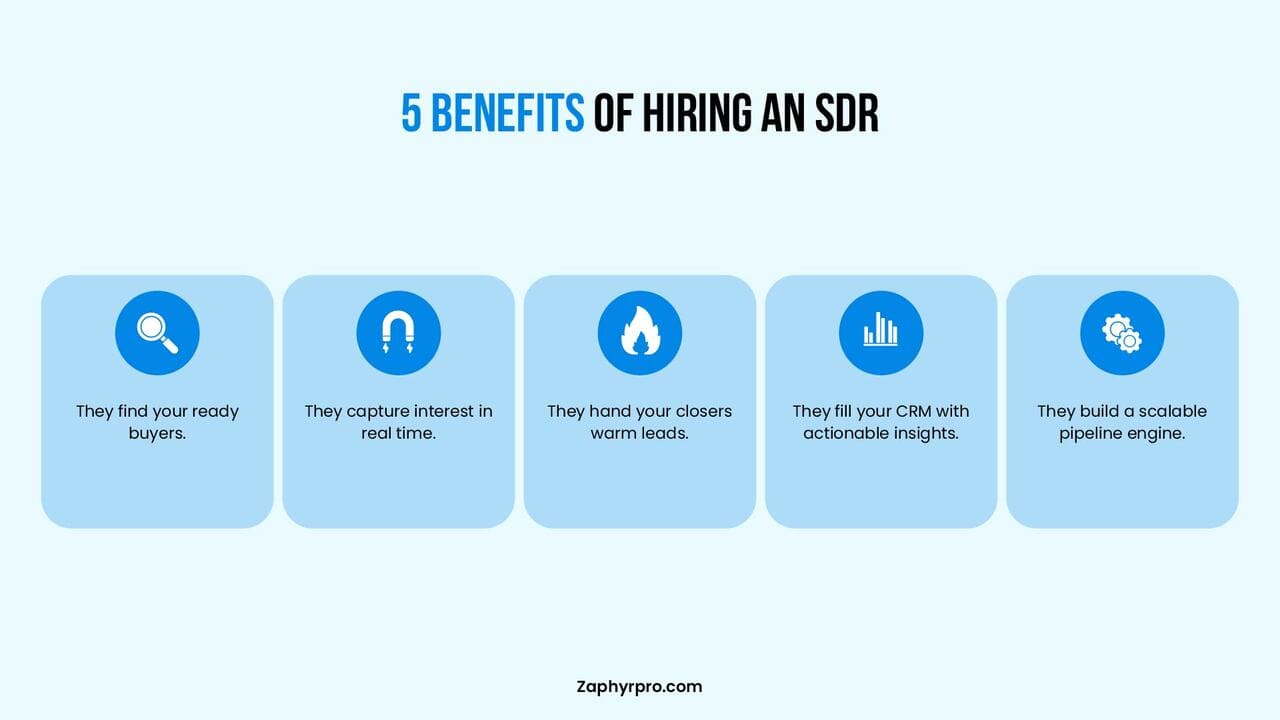
1. More Sales
Sales development representatives find people who are ready to talk. This lets your closers spend all their time talking to ready buyers. More good conversations mean more deals closed. A dedicated SDR turns interest into revenue faster.
2. Faster Replies
SDRs reply to leads right away. Fast replies matter. When someone shows interest, they want a quick answer. An SDR makes sure no lead has to wait. Speed shows you are reliable and attentive.
3. Happier Sales Team
It is hard for closers to call people who are not interested. SDRs give closers a list of people who want to talk. This makes closers more successful and much happier at work. Your team will stay motivated and perform better.
4. Better Information
SDRs write down every call and email in your CRM dashboard. You can see which leads turn into sales. You learn what works. You stop guessing and use facts to make decisions. Clear data helps you improve your entire sales process.
5. Easier Growth
The SDR role is made to grow. When you find a good way to get leads, you can train more SDRs to do the same thing. This builds a reliable way to find new customers. It creates a system that scales with your business.
Once you see the impact an SDR can have, the next question is how to bring one on board. You can either build an in-house SDR team or partner with specialized outsourced SDR companies. Each path has its own advantages, and the key is knowing what makes a great sales development representative before you start hiring.
What Makes A Great SDR?
Now that you’re ready to hire an SDR, knowing the right qualities to look for is your most important step. These are the traits that separate good SDRs from great ones.
1. A Natural Curiosity
Great SDRs are naturally curious. They don’t just follow a script. They ask questions to understand the prospect’s real challenges. They listen more than they talk. This helps them connect a prospect’s need with your solution.
2. Resilience and Positivity
Hearing “no” is a daily part of the job. A great SDR doesn’t take rejection personally. They stay positive and motivated. They see every “no” as one step closer to a “yes.” This resilience keeps them productive all day long.
3. Clear and Confident Communication
They communicate with clarity and confidence, both in writing and on the phone. They can explain your value simply. They are not pushy, but persuasive. They make prospects feel understood, not sold to.
4. Strong Organization and Discipline
An SDR manages many leads and tasks at once. Great ones are highly organized. They live in the CRM, take clear notes, and follow up on time. This discipline ensures no opportunity is missed and your data is accurate.
5. Comfort with Technology
From CRM software to sales engagement platforms, an SDR needs to learn tools quickly. The best SDRs see technology as a way to work smarter, not a barrier. They use it to personalize outreach and save time.
6. A Team Mindset
Great SDRs know they are part of a team. They work closely with marketing to understand leads and with account executives to hand off opportunities smoothly. They share what they learn to help the whole team improve.
How to Hire an SDR in 2026
Hiring the right SDR is critical, because a top performer can generate up to 3x more qualified meetings than an average one. For CEOs and COOs, this hire builds your pipeline engine. Here is how to do it right.
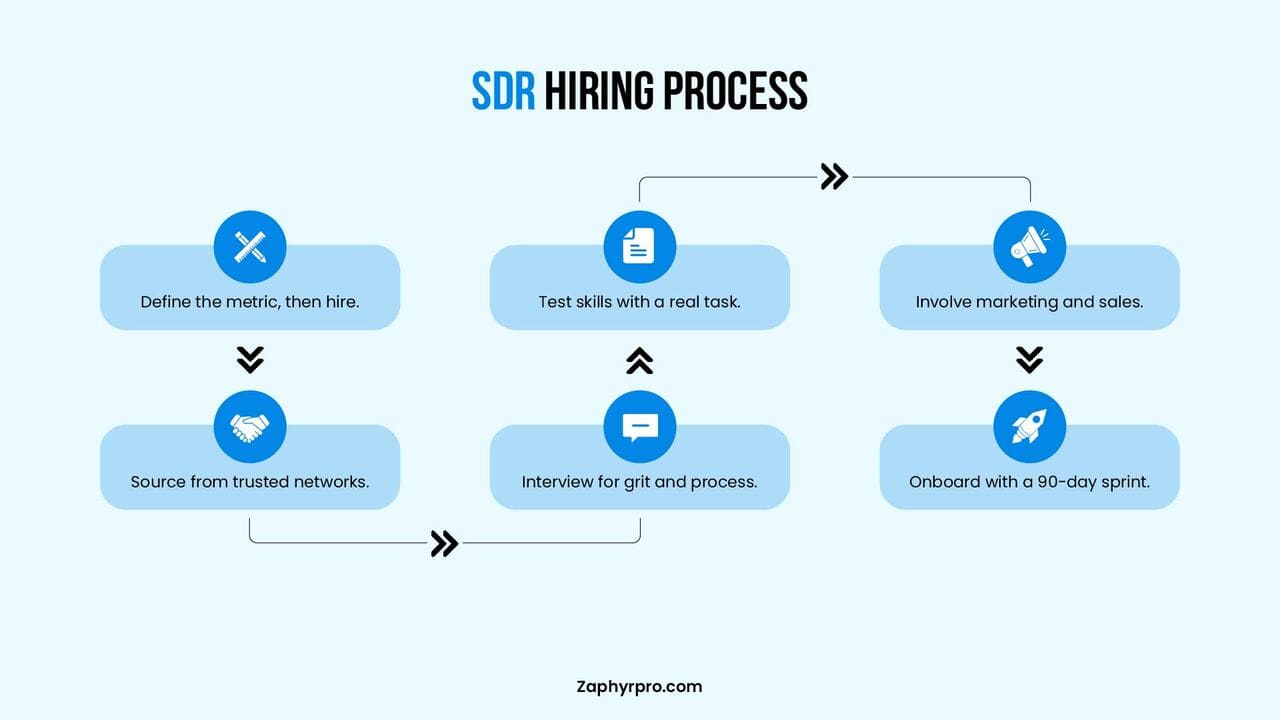
1. Define the Business Outcome First
Before you post a job, define what success looks like. Is it 15 qualified meetings per month? A 20% increase in sales pipeline value? Start with the metric. This focus will shape every step that follows and ensure the role is tied to revenue.
2. Source Candidates from Multiple Channels
Cast a wide net to find talent. Use LinkedIn and traditional job boards, but don’t stop there. Explore specialized sales hiring marketplaces that pre-vet candidates. Also, leverage your leadership network for referrals; a recommendation from a trusted peer often yields the highest-caliber candidate for sales development representative role.
3. Lead a Values-Based Interview
As a leader, you set the tone. Move beyond resume details. Ask questions that reveal drive, ownership, and strategic thinking:
- “Describe a time you had to learn something complex quickly. How did you approach it?”
- “What does a disciplined daily work routine look like to you?”
- “How would you explain our company’s value to a skeptical prospect in one minute?”
You are assessing for coachability and resilience as much as skill.
4. Validate with a Practical Assessment
Skills must translate to action. Design a 30-minute practical test. Provide a sample prospect research profile and have the candidate draft a tailored outreach email. Then, role-play a follow-up call. This reveals their ability to think critically and communicate under pressure, as key traits for success.
5. Evaluate for Strategic Team Integration
An SDR must bridge marketing and sales. Involve key stakeholders from both teams in the interview process. Their buy-in is crucial for seamless collaboration. Ask the candidate how they would use feedback from marketing to improve outreach, or how they would hand off a lead to sales.
6. Structure the Offer for Mutual Success
Present a compelling offer that rewards results. Consider a base salary with a clear commission structure tied to qualified meetings booked. Once accepted, a structured 30-60-90 day onboarding plan is non-negotiable. It should include product training, shadowing, and clear milestones to ensure they contribute to pipeline growth quickly.
Performance Metrics & Tools for SDRs
To manage a sales development representative function effectively, you need visibility into both effort and outcomes. To get the outstanding results, you need to track the right SDR performance metrics and equip your team with the right tools.
So, what types of SDR metrics should you track, and how can you do it efficiently? Keep reading to find out.
Core SDR KPIs Every Manager Should Monitor

Meetings Booked per Rep
The goal of a sales development representative is to start conversations, and this metric shows how often they succeed. It measures their core output. To increase this number, review which of their emails or calls get the most responses and have them focus on that approach.
Opportunities Created
A booked meeting only matters if it turns into a real sales chance. This tracks the dollar value of the deals they help start. SDRs should learn to ask about budget and decision-makers early to ensure they’re passing on valuable leads.
Lead-to-Opportunity Conversion Rate
This shows how good an SDR is at choosing the right people to call. A high rate means they’re not wasting time on uninterested leads. Teach them to spot signs of a ready buyer, like clear needs and timelines.
SQL to Close-Won Ratio
This proves whether the leads an SDR finds are the right long-term fit. It tracks how many become customers. Share stories of past won deals with your SDR so they learn what a perfect lead looks like.
Outbound Calls per Day
Consistent calling is what makes everything else possible. Without enough calls, the pipeline runs dry. Help your SDR block time for calling and use tools that make dialing faster, so they can talk more and type less.
Essential Tools for SDRs in 2026
To execute on those SDR KPIs, SDRs rely on tools that track leads, automate outreach, and measure engagement so every activity contributes directly to pipeline growth.
A Reliable CRM
A CRM like Salesforce or HubSpot is non-negotiable. It’s the single source of truth where every interaction is logged, keeping the pipeline organized and visible to the entire team.
A Sales Engagement Platform
Tools like Outreach or Salesloft are the engine for outbound work. They allow SDRs to create sequences of personalized emails, calls, and social touches, all automated and tracked from one place.
A Power Dialer
Manual dialing is a time sink. A power dialer automates the calling process, connecting the SDR to the next number instantly after a call ends, maximizing talk time and call volume.
A Data Enrichment Service
Tools like ZoomInfo or Clearbit instantly provide accurate contact details and company insights. This allows an SDR to personalize their outreach at scale, moving beyond generic messages.
An AI Co-Pilot
In 2026, AI tools act as real-time assistants. They can listen to calls and suggest next questions, analyze email replies to draft ideal responses, and prioritize which leads to contact next based on engagement signals. This represents the growing trend of sales automation in the modern sales stack.
For businesses that want the benefits without the hiring complexity, exploring SDR outsourcing to a specialized provider is a strategic option. This can give you access to a skilled virtual sales development rep or an entire virtual SDR team.
Final Thoughts
You now know what a sales development representative does, why they matter, and how to find a great one. The next step is to look at your own team. Are your closers spending too much time finding leads instead of closing deals?
If that’s the case, it may be time to rethink how your sales team is structured.
Zaphyre helps you add a dedicated SDR function without slowing down your closers or increasing overhead. Schedule a consultation today to see if it’s the right fit for you.
Frequently Asked Questions
A Sales Development Representative (SDR) finds and contacts potential customers, qualifies their interest, and schedules sales meetings for Account Executives. Their main tasks are prospecting, outreach, and lead qualification.
To hire an SDR, define your goals, write a clear job description, source candidates from job boards and referrals, conduct interviews focused on resilience and communication, give a practical skills test, and make a competitive offer with structured onboarding.
SDRs increase sales by filling the pipeline with ready-to-buy leads, improve lead response time, boost sales team morale, provide clear CRM data for better decisions, and create a scalable system for business growth.
A successful SDR is curious, resilient, a clear communicator, highly organized, comfortable with technology, and a team player. They listen well, handle rejection positively, and use tools to work efficiently.
While definitions vary by company (some use the terms interchangeably or even reverse them), traditionally an SDR works primarily with inbound leads (people who have already shown interest), while a BDR focuses on outbound prospecting (cold outreach to new contacts). Both qualify leads, but their lead sources typically differ.