

Specifically, a virtual sales assistant is a remote professional who supports sales teams with tasks such as lead generation, CRM management, prospect outreach, qualification, and follow ups. By handling these sales support tasks, they help sales reps spend less time on administrative work and more time selling and closing opportunities.
“Time is money,” said Benjamin Franklin.
Clearly, Ben never spent three hours updating a CRM system or chasing prospects who went ghost after saying they were “very interested.”
If Franklin ran a sales team today, he’d probably update his famous quote to: “Time is admin work, and admin work is the enemy of commissions.”
And isn’t that what most sales teams deal with today?
Hours disappear into spreadsheets. Endless reminders. Prospect lists that never stop growing.
All important? Yes.
But none of it brings in REVENUE.
Which is why many companies now rely on a virtual sales assistant.
The work still has to be done, but it does not have to be done by your salespeople.
You can hire a virtual sales assistant in many ways, onshore or offshore. This guide will explain what they do, why they’re important in 2026, and how to choose the right fit for your business.
Key Takeaways
- Sales reps spend just 29% of their week selling, with the other 71% going to admin, data entry, and prep. A virtual sales assistant can take much of that work off their plate.
- A virtual sales assistant handles sales support work remotely, including lead research, CRM management, outreach, follow ups, and appointment setting.
- The role can support different parts of the sales process, from prospecting and qualification to keeping pipeline information organized.
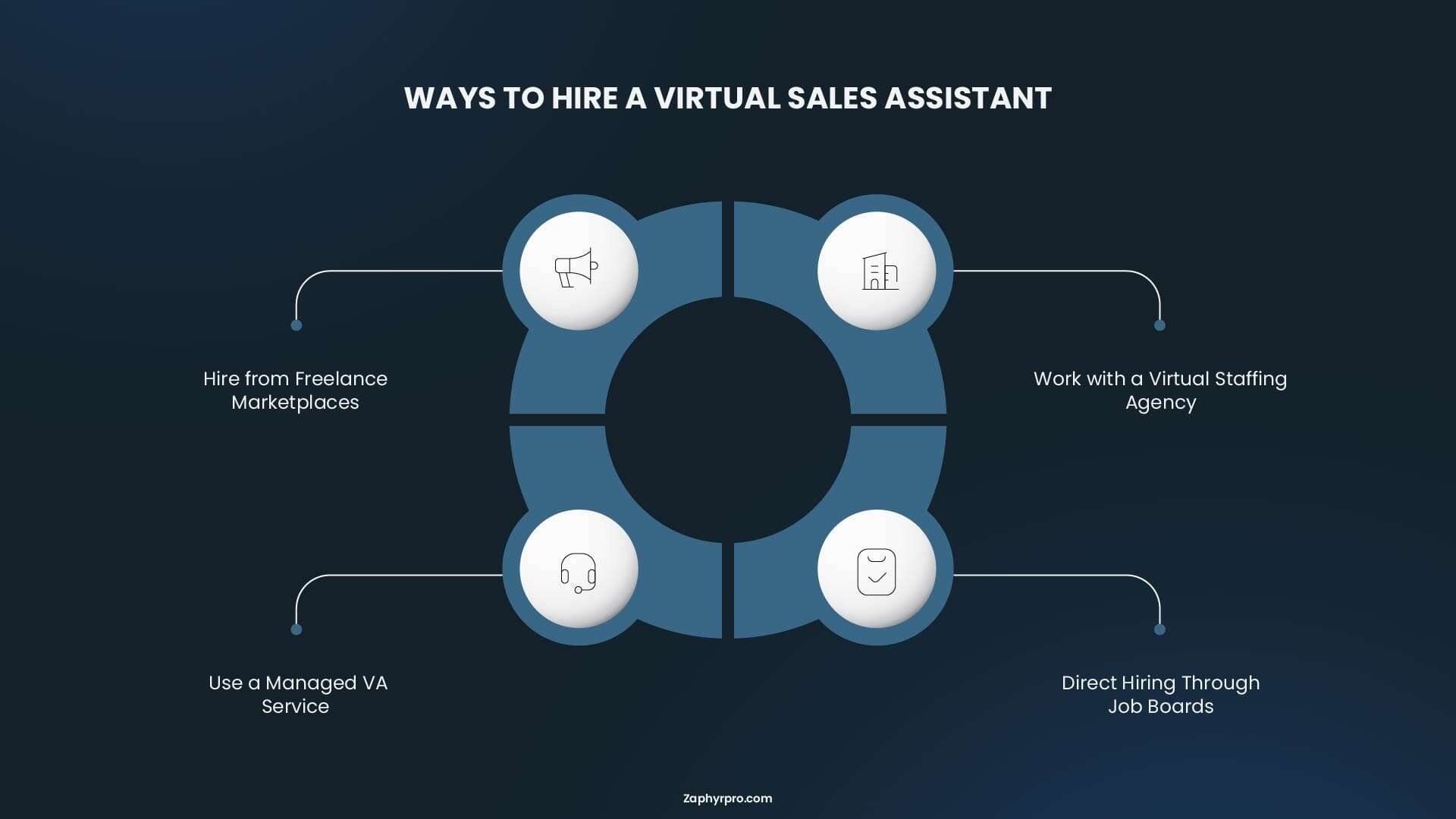
- You can hire a virtual sales assistant through freelance platforms, staffing agencies, managed services, or direct hiring.
- Expect to pay $15 to $45 per hour, or $800 to $2,500 a month, depending on experience, location, and how much you hand off.
- The right choice depends on how much sales support you need and how much recruiting and management you want to handle internally.
What Is a Virtual Sales Assistant?
I remember when Tim Ferriss published The 4-Hour Workweek in 2007, which was later updated in 2009. The book helped bring the idea of outsourcing repetitive work into the mainstream. The basic idea was simple: hand off lower value tasks so you can spend more time on higher value priorities.
Since then, virtual sales representatives have become common. You can find freelancers, agencies, offshore providers, and local specialists offering support. The hard part today isn’t deciding if they help. It’s figuring out which kind of help you actually need.
To put that in perspective:
A sales virtual assistant is not the same as a general VA. They aren’t there to book travel one day and post on social media the next. Their job is focused on sales. They research leads, update the CRM, keep the pipeline current, and follow up with prospects. While they take care of these jobs, your reps can spend their time selling.
So, is virtual assistant still in demand?
Absolutely.
According to The Business Research Company, the global virtual assistant market is expected to grow from $4.97 billion in 2023 to $6.37 billion in 2024, and is projected to reach $15.88 billion by 2028, with a CAGR of 25.7%.
That kind of growth tells you one thing that the need for skilled, flexible sales support isn’t slowing down any time soon.
What does a virtual sales assistant do?
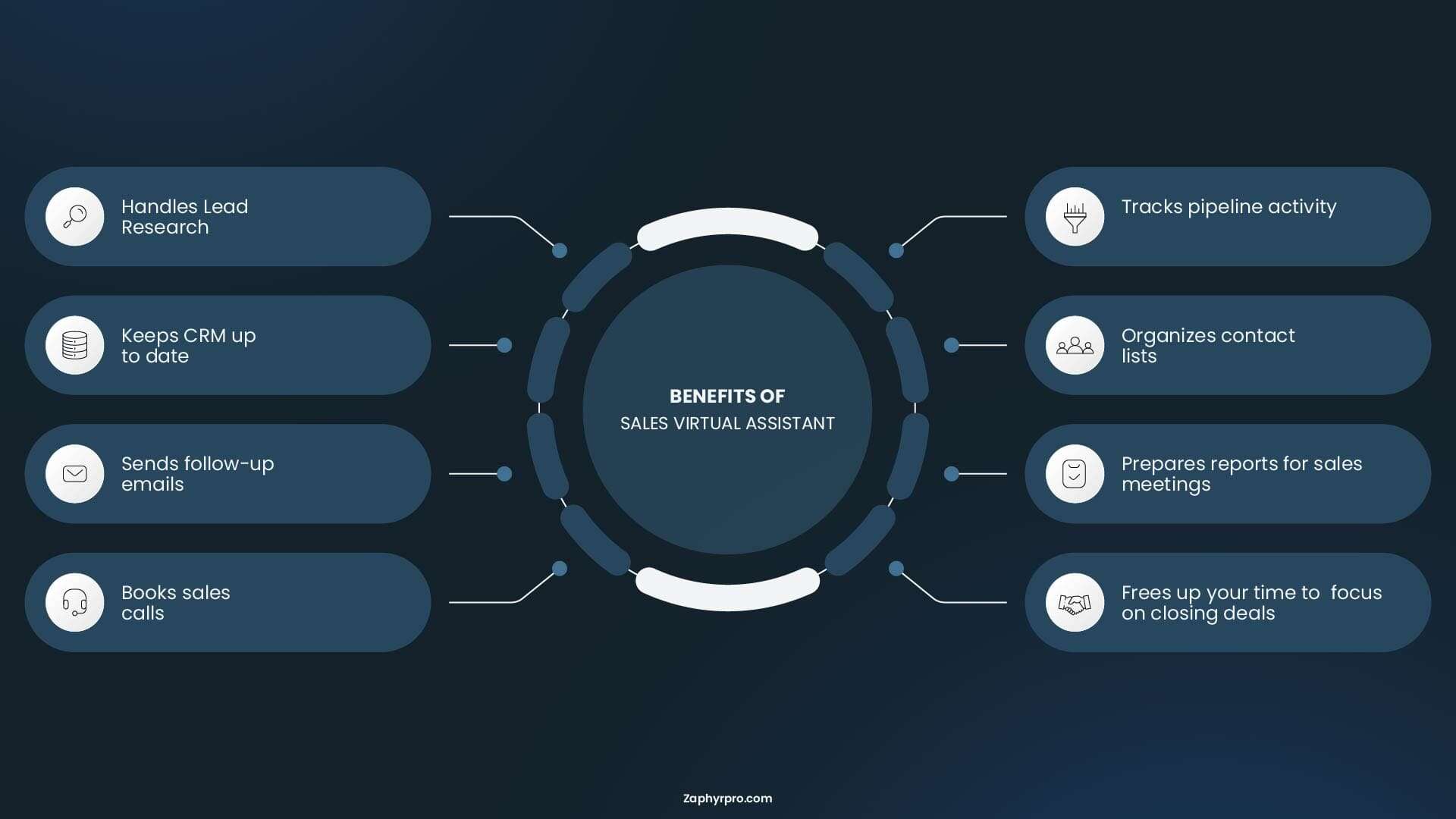
A virtual sales assistant supports your sales team by handling non-selling tasks like:
- Researching and qualifying leads
- Updating and maintaining your CRM
- Managing follow-up emails and call schedules
- Organizing sales pipeline data
- Creating reports and tracking performance metrics
- Booking meetings and sending reminders
Now, you might be thinking this sounds similar to what an executive assistant does – and you’re not wrong. There’s definitely some overlap in the organizational and administrative skills.
But here’s the key difference:
While an executive assistant focuses on personal scheduling, travel arrangements, and general administrative support for executives, a virtual sales assistant lives and breathes your sales process.
They understand B2B market research, lead qualification criteria, know how to nurture prospects through your sales funnel, and can spot when a deal is going cold. It’s the difference between someone who can schedule a meeting and someone who knows which meetings are worth your time.
If you’re considering an executive assistant instead and want to explore that route thoroughly, you might find it helpful to learn about the top executive assistant interview questions to ensure you’re asking the right questions during your hiring process.
For growing businesses focused on revenue growth, a virtual sales assistant can provide more relevant support when the workload involves prospecting activities, follow ups, CRM management, and other sales specific tasks.
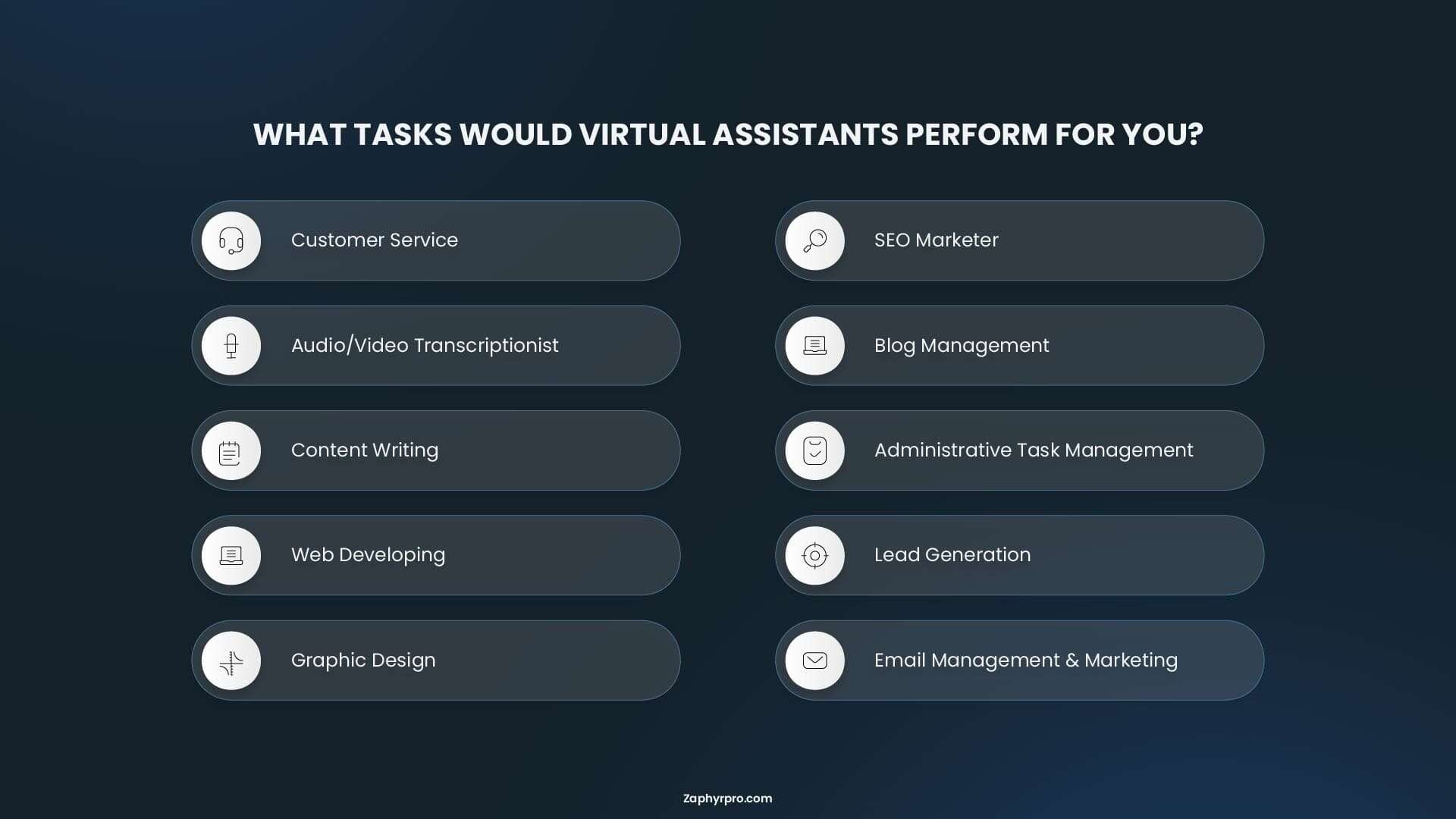
There are also different types of virtual sales assistants.
- Outbound assistants run sales prospecting, list building, and cold outreach. Launching a campaign for new accounts? They research the decision-makers and tee up the first touch. This is close to what a virtual cold calling assistant does day to day.
- Inbound assistants qualify incoming leads, clean up the CRM, and make sure every contact is followed up with. If someone downloads a guide from your site, they’ll log it and schedule the next step for your sales team.
- Hybrid assistants do a mix of both. Smaller teams often choose this type because it gives flexibility as needs change.
Delegate the busywork so your salespeople can spend more time closing deals.
Why Should You Consider Hiring a Virtual Assistant for Sales?
You need a virtual sales assistant if you’re missing sales opportunities because your team can’t respond to leads fast enough or handle the growing volume of prospects. Many business owners try to manage everything themselves, thinking they’re saving money.
Eventually (as your sales volume grows), you reach a point where your revenue stalls because you can’t keep up with all the leads, calls, and paperwork that come with a growing sales pipeline.
Signs You Need a Virtual Sales Assistant
- Leads go cold before you contact them
- You’re working evenings just to catch up on follow-ups
- Customers complain about slow response times
- You’re not calling back prospects fast enough
- Your sales data is scattered across different tools
- You’re missing important sales meetings
- Qualified leads slip through the cracks
When you reach the stage where you’re too busy to follow up with hot leads, you’re leaving money on the table. And that means it might be time to hire a virtual sales rep.
What Skills and Qualities Should You Look for in a Virtual Sales Assistant?
The right virtual sales assistant needs more than a good internet connection and a willingness to make calls. They need to work comfortably inside your sales process and stay consistent when the pipeline gets busy.
Look for these qualities:
- Strong Communication Skills: Your VSA may communicate with prospects through calls, email, LinkedIn automation, or other channels. Clear writing and confident communication matter because every interaction reflects your company.
- Sales and Prospecting Experience: Look for experience with lead generation specialists, appointment setters, prospect research, qualification, or sales support. For B2B roles, familiarity with your type of buyer can be especially useful.
- CRM Proficiency: Your VSA should be comfortable working in your CRM and keeping lead records accurate. Poor CRM hygiene can quickly create more work instead of removing it.
- Organization and Follow Through: Sales support involves managing multiple prospects, follow ups, tasks, and deadlines. Someone who consistently misses reminders or leaves records incomplete can create pipeline problems.
- Persistence Without Being Pushy: Outbound sales involve rejection. A strong VSA can follow up consistently without becoming aggressive or treating every prospect interaction the same way.
- Self Management: Remote work requires accountability. Look for someone who can manage their workload, communicate progress, and stay productive without constant supervision.
- Comfort With Sales Tools: Depending on your process, the role may involve a CRM, email platform, LinkedIn, calling software, spreadsheets, or other sales tools. The candidate does not need to know every platform, but they should be comfortable learning new ones.
- B2B Understanding: If you sell to businesses, B2B experience can shorten the learning curve. Your VSA should understand that prospecting a decision maker, qualifying an account, and booking a sales conversation require more than simply sending messages at volume.
Which is better, a freelancer or a virtual assistant?
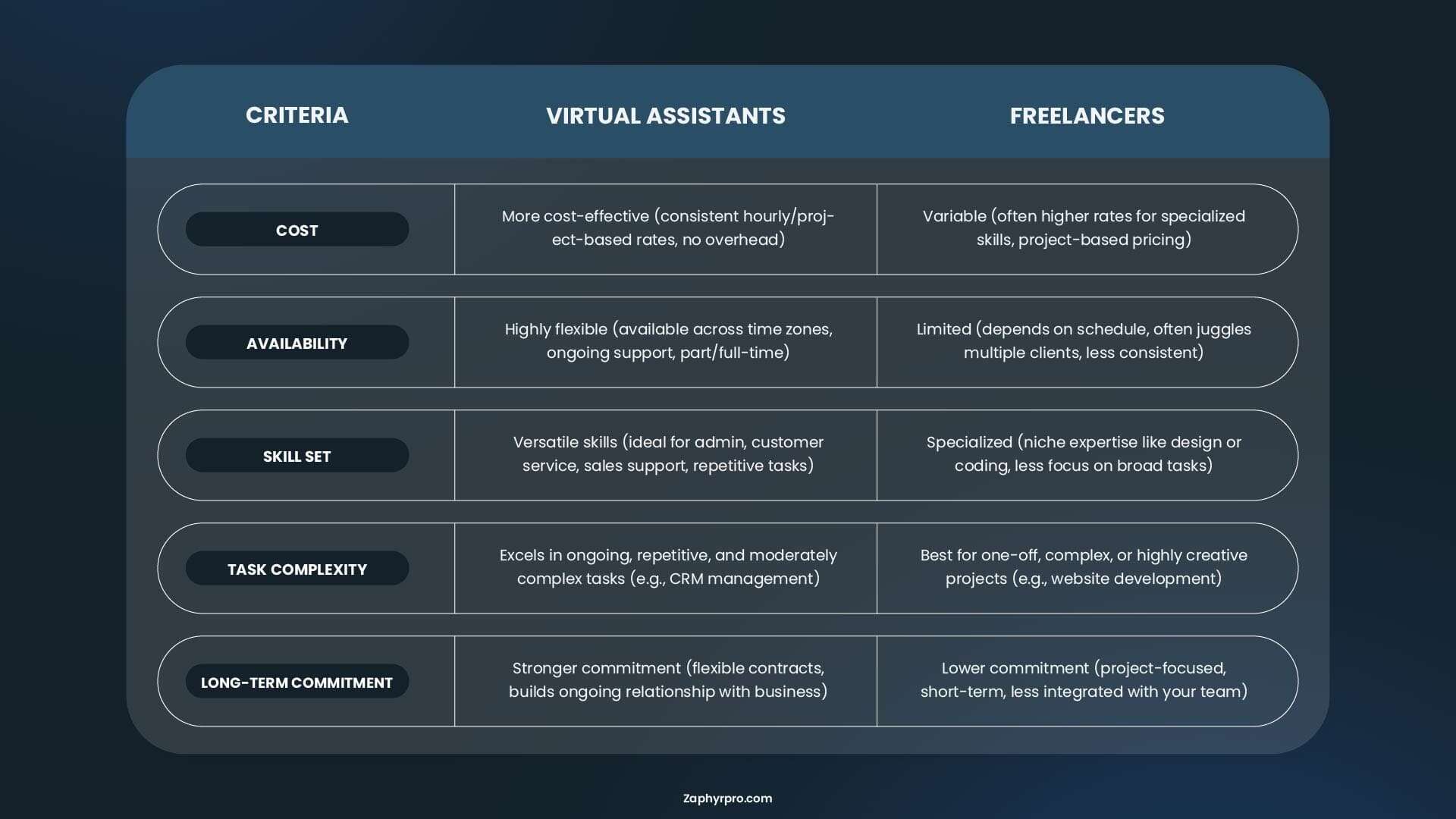
Given all of these points, you might be wondering: why choose a virtual sales assistant over a freelancer at all? Can’t you get the same specialized sales expertise from a freelancer who might have more experience in your specific industry?
You’d be surprised. While freelancers can offer deep expertise, you may find that the advantages of a virtual sales assistant far outweigh the appeal of specialized knowledge, especially when it comes to building a consistent, reliable sales process.
Here's why a virtual sales assistant typically works better for ongoing sales support:
Consistency Matters More Than Specialization: Your sales process needs someone who shows up every day, understands your customers, and follows your specific procedures. A virtual sales assistant becomes part of your team and learns your business inside and out. Freelancers, while skilled, often juggle multiple clients and may not give your sales pipeline the dedicated attention it deserves.
Sales is About Relationships, Not Just Skills: Building trust with prospects takes time and consistency. When the same virtual sales assistant handles your leads week after week, they develop a feel for your customers and can represent your brand authentically. With freelancers, you’re constantly starting over with new people who don’t know your business or your customers.
Ongoing Support vs. Project Work: Sales support isn’t a one-time project – it’s an ongoing process that needs daily attention. Virtual sales assistants are built for this kind of long-term partnership, while freelancers typically work best for specific, short-term projects.
Virtual Sales Assistant vs. SDR vs. Freelancer
A virtual sales assistant may handle sales administration, prospect research, CRM management, follow ups, outreach, and B2B appointment setting. An SDR (Sales Development Representative) usually has a more focused role in outbound prospecting and qualifying opportunities. A freelancer can handle sales work too, but typically works independently on a project or contracted basis.
The right choice depends on how much of your sales process you need covered and how much management you want to handle internally.
| Role | Primary Focus | Typical Responsibilities | Best For |
|---|---|---|---|
|
Virtual Sales Assistant |
Sales support and execution |
Lead research, CRM updates, follow ups, outreach, qualification, scheduling |
Teams that need ongoing sales support |
|
SDR |
Prospecting and pipeline generation |
Cold calling, email outreach, lead qualification, appointment setting |
Companies focused heavily on outbound sales |
|
Freelancer |
Flexible, contracted support |
Depends on the freelancer’s specialization |
Businesses needing specific expertise or project based support |
The biggest difference is not the job title. It is the scope of responsibility and level of support.
A VSA can take on a broader mix of sales support tasks. An SDR team typically focuses more heavily on creating and qualifying opportunities. A freelancer gives you flexibility, but you usually manage the relationship, workflow, and accountability yourself.
Onshore, Offshore, or Nearshore: Which Is Right for You?
Where your virtual sales assistant is based can shape more than your hourly rate. It can affect when they can work with your sales team, how easily they communicate with prospects, and how much coordination your team needs to provide.
The right choice depends on what you value most. If your assistant needs to work closely with US based reps during their normal hours, time zone overlap may matter more than getting the lowest possible rate. If cost is a bigger priority and the role can operate independently, offshore hiring may make more sense.
| Hiring Model | Typical Rate Range | What It May Offer | What to Consider |
|---|---|---|---|
|
Onshore |
$25 to $45+/hour |
Strong time zone alignment, easier real time communication, and familiarity with the local market |
Higher labor costs |
|
Nearshore |
$18 to $35+/hour |
Lower costs while often maintaining convenient working hour overlap |
Talent availability and experience can vary by market |
|
Offshore |
$15 to $25/hour |
Access to a broader talent pool and potentially lower labor costs |
Time zone differences may require more planning and communication |
So Which Model Makes Sense?
- Choose onshore when close collaboration, local market familiarity, and overlapping working hours are priorities.
- Consider nearshore when you want to balance cost with convenient time zone coverage.
- Consider offshore when keeping costs manageable and accessing a wider talent pool are more important than having the assistant work in the same time zone.
How Much Does a Virtual Sales Assistant Cost?
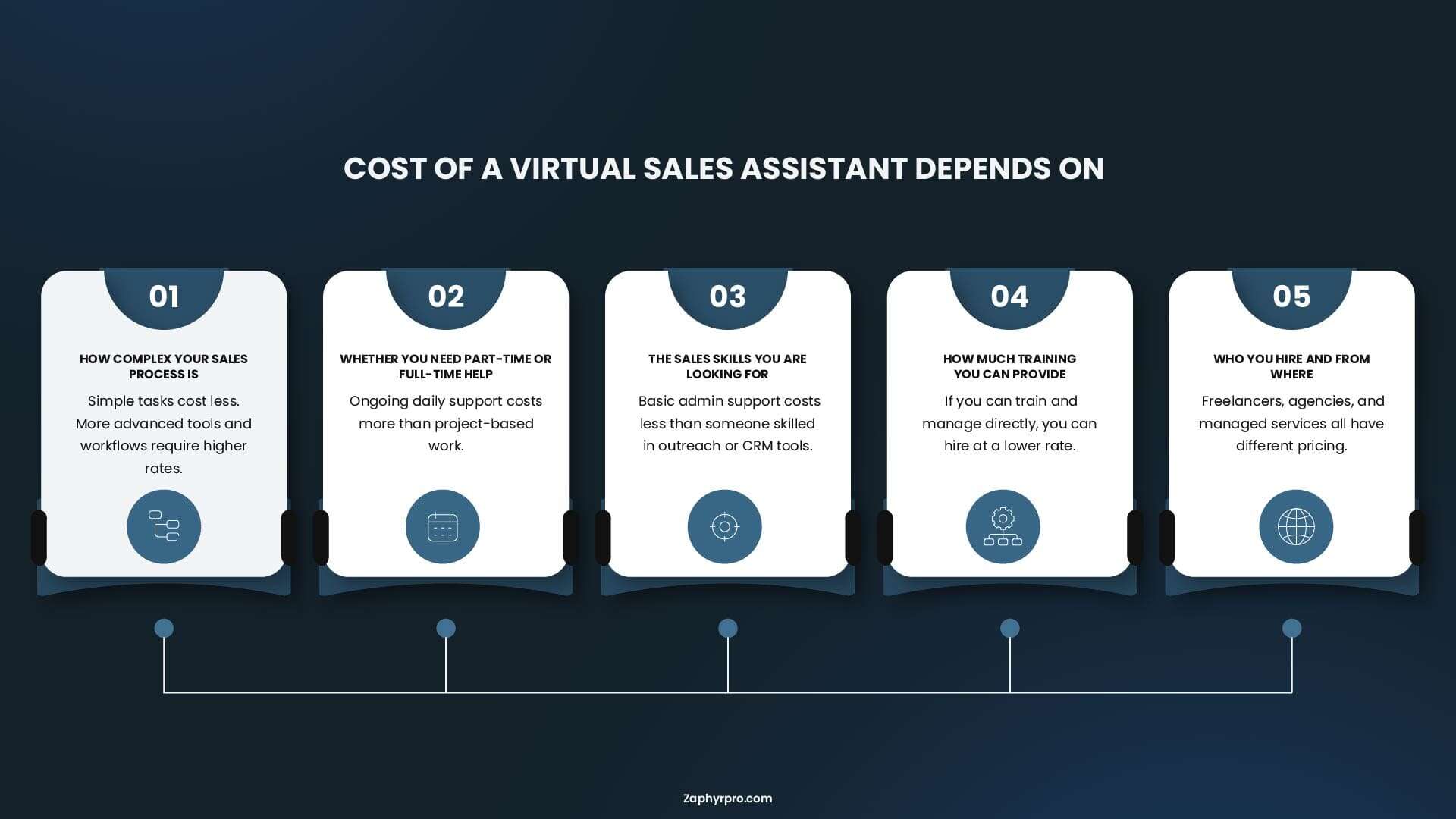
Once you know what kind of sales support you need, the next question is usually cost. Pricing can vary quite a bit depending on the assistant’s experience, where they’re based, the work you want them to handle, and whether you hire directly or through a service.
Understanding Virtual Sales Assistant Pricing
Most virtual sales assistant services use one of three pricing models:
Hourly Rates ($20-45/hour)
You pay for actual time worked. This works well if your sales volume fluctuates or you’re testing out virtual assistance. Rates vary based on the assistant’s experience and the complexity of tasks.
Monthly Packages ($800-2,500/month)
Fixed monthly fee for a set number of hours or specific deliverables. Most businesses prefer this because it’s predictable and often more cost-effective than hourly rates.
Performance-Based Pricing
Some services charge based on results – like per qualified lead generated or per meeting scheduled. This aligns costs with your sales outcomes but isn’t widely available.
What Affects Your Virtual Sales Assistant Cost?
Experience Level
- Entry-level assistants: $20-28/hour (basic CRM tasks, data entry, appointment scheduling)
- Experienced assistants: $30-40/hour (lead qualification, sales research, pipeline management)
- Senior sales support: $40-45/hour (complex sales processes, strategic support)
Geographic Location
- U.S.-based assistants: $35-45/hour
- English-speaking countries (Canada, Australia): $25-35/hour
- Offshore locations: $15-25/hour
Service Package
- Basic support: Just the assistant
- Standard service: Assistant + basic management
- Premium service: Assistant + dedicated account manager + backup support + training
Hidden Costs to Consider
Setup and Training Time: Most services include 2-4 hours of onboarding, but complex sales processes might need more. Factor in your time for initial training sessions.
Tools and Software: Your virtual assistant will need access to your CRM, email marketing platform, and other sales tools. Most businesses already have these, but additional user licenses might cost $20-100/month.
Quality Assurance: Premium services include ongoing quality monitoring. With lower-cost options, you might spend 2-3 hours per week reviewing work and providing feedback.
Is It Worth the Investment?
Here’s a simple way to think about ROI:
If your virtual sales assistant helps you close just one additional deal per month, they’ve likely paid for themselves.
When calculating virtual assistant ROI, start with your time. If you’re spending 15 hours a week on sales admin tasks instead of selling, and your time is worth $50/hour, that’s $750/week in opportunity cost – or $3,000/month. A virtual sales assistant costing $1,500/month could free up that time and actually save you money while increasing sales.
The question isn’t whether you can afford a virtual sales assistant – it’s whether you can afford not to have one.
How to Hire Virtual Sales Assistant
You have four main ways to hire a virtual sales representative. Each option has different costs, time commitments, and levels of support. Here’s what you need to know about each approach.
Option 1: Hire from Freelance Marketplaces
You post your job requirements, freelancers submit proposals, and you choose based on their profiles, rates, and previous work samples. Most platforms handle payments and provide basic dispute resolution.
Popular Platforms:
- Upwork – Largest marketplace with detailed profiles and work history
- Fiverr – Good for specific sales tasks and projects
- PeoplePerHour – Wide selection with competitive bidding
- 99designs – Professional freelancers with portfolio showcases
Best For: Businesses that want direct control over hiring and don’t mind managing the relationship themselves.
Option 2: Work with a Virtual Staffing Agency
VA agencies maintain teams of pre-screened virtual assistants. You tell them your requirements, they match you with suitable candidates from their roster, and you work directly with the assigned assistant.
Popular Sales-Focused Agencies:
- Time Etc – US and UK-based assistants with sales experience
- Belay – College-educated US virtual assistants
- Fancy Hands – On-demand task-based assistance
- MyTasker – Philippines-based team with sales specialization
The Process:
- Contact the agency with your needs
- They recommend 2-3 candidates from their team
- You interview or trial the candidates
- Start working with your chosen assistant
Best For: Businesses wanting pre-vetted candidates but still preferring to manage the working relationship directly.
Option 3: Use a Managed VA Service
These companies provide full virtual staffing services, handling everything from recruitment and training to management and quality control. Your virtual assistant is their employee, and you get an account manager who ensures everything runs smoothly.
Leading Managed Services:
- Zaphyre – Specialized B2B lead generation and GTM execution services
- Delegate Solutions – Full-service with US-based management
- Time Doctor – Comprehensive virtual assistant solutions
- Virtual Staff Finder – Specializes in Philippines-based assistants
The Complete Process:
- Consultation call to understand your needs
- They assign a trained assistant and account manager
- Quick onboarding with your systems and processes
- Ongoing management and performance monitoring
Best For: Busy business owners who want results without managing another person.
Option 4: Direct Hiring Through Job Boards
Post your job description, receive applications directly, screen and interview candidates yourself, then hire your preferred choice as an independent contractor or employee.
Where to Post Jobs:
- Indeed – Largest job board with remote work filters
- LinkedIn – Professional network with advanced search options
- Remote.co – Exclusively remote job postings
- FlexJobs – Curated remote and flexible positions
- We Work Remotely – Popular remote-first job board
Best For: Companies wanting full control over the hiring process and direct employment relationships.
What Tools Does a Virtual Sales Assistant Use?
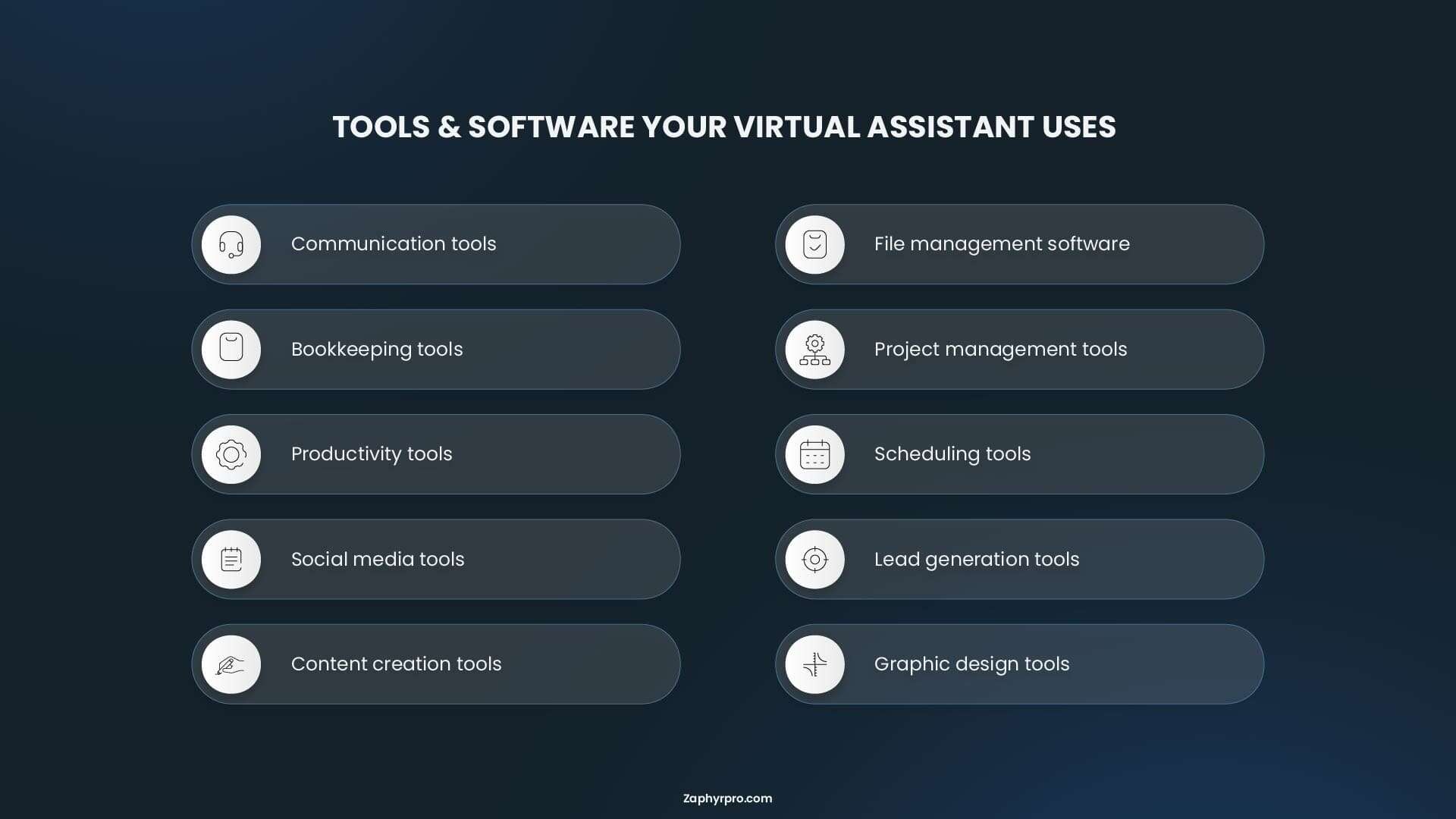
A virtual sales assistant typically works across a handful of sales and communication tools. The exact software depends on the company, but the most common categories include:
- CRM Platforms: Tools such as Salesforce, HubSpot, and Zoho CRM give sales teams a central record of contacts, accounts, activities, and opportunities.
- Lead Generation and Prospecting Tools: Tools such as LinkedIn Sales Navigator, Apollo, and ZoomInfo can provide company details, contact information, and other data used for prospect research.
- Sales Engagement Platforms: Platforms such as Outreach, Salesloft, and Apollo are designed to help sales teams manage prospect sequences and communication at scale.
- Email Platforms: A virtual sales assistant may work with Gmail, Microsoft Outlook, or a dedicated sales email platform to manage business correspondence and prospect communication.
- Calling Software: Platforms such as Aircall, RingCentral, and Dialpad can provide calling, contact management, call logging, and related communication features.
- Scheduling Tools: Calendly, HubSpot Meetings, and Microsoft Bookings allow people to view availability and select an appropriate meeting time.
- Communication and Collaboration Tools: Remote sales teams often use tools such as Slack, Microsoft Teams, and Zoom for internal communication, meetings, and collaboration.
- Spreadsheets and Reporting Tools: Google Sheets, Microsoft Excel, and reporting dashboards are commonly used for organizing sales data, maintaining lists, and presenting information in a format that is easy for the team to review.
The tools a virtual sales assistant needs ultimately depend on the company’s existing sales stack. Some teams may use several specialized platforms, while others may manage most of their sales activity through a single CRM. You likely own most of this already. Budget for extra user licenses, which usually run $20 to $100 per month per tool.
How to Onboard a Virtual Sales Assistant: The First 30 Days
Hiring the right virtual sales assistant is only the first step. The first 30 days determine how quickly they understand your sales process, how much supervision they need, and whether they can eventually take work off your team’s plate. The goal is to give them a clear understanding of what they are responsible for, how your sales process works, and what good performance looks like.
Days 1 to 7: Introduce the Business and Sales Process
Start with context before assigning a full workload. Your virtual sales assistant should understand:
- What your company sells and who you sell to
- Your ideal customer profile and target accounts
- The buyer personas they will interact with
- Your sales process and pipeline stages
- Which leads are qualified and which are not
- Your messaging, positioning, and common objections
- The sales tools and CRM they will use
- Which activities they own and which require a salesperson’s involvement
This is also the right time to explain your communication expectations. Decide where questions should go, how often progress should be reported, and when the assistant should escalate a prospect rather than handle it independently.
Days 8 to 14: Start With a Controlled Workload
Once they understand the basics, give them real work, but keep the scope manageable. They might begin with tasks such as prospect research, CRM updates, list building, follow ups, or appointment scheduling. If they support outbound sales, let them work through a smaller group of prospects before expanding the volume. Review their early work closely.
Look for things such as:
- Are lead records accurate?
- Are they following your qualification criteria?
- Are follow ups happening when they should?
- Is their outreach consistent with your messaging?
- Are CRM activities being recorded correctly?
- Do they know when to ask for help?
This stage is less about speed and more about accuracy. It is easier to correct a process early than to undo weeks of bad data or inconsistent outreach.
Days 15 to 21: Build Consistency
By the third week, your virtual sales assistant should be becoming comfortable with the routine. Start shifting from step by step instruction toward regular check-ins. Review activity and outcomes together rather than monitoring every individual task. This is a good point to establish a simple performance scorecard. Depending on the role, you might track:
- Prospects researched
- Leads contacted
- Follow ups completed
- Qualified leads
- Meetings scheduled
- CRM records updated
- Response rates
- Tasks completed on time
The right metrics depend on what you hired the assistant to do. Don’t measure activity simply because it is easy to count. Connect the metrics to the part of your sales process they actually control.
Days 22 to 30: Move Toward Independent Ownership
By the fourth week, the goal is for your virtual sales assistant to handle their core responsibilities with less day to day direction. They should know what needs to be done, where to find the information they need, how to document their work, and when something needs to be escalated to a salesperson or manager.
At this point, review the first month’s results and identify three things:
What is working?
Keep the processes that are producing consistent results.
What needs adjustment?
Clarify responsibilities, improve training, or change workflows where problems continue.
What can they own next?
If they are handling their current responsibilities reliably, gradually expand their scope rather than giving them everything at once.
What a Successful First 30 Days Should Look Like
A successful onboarding period doesn’t mean your virtual sales assistant knows everything about your business after one month. It means they understand their role, follow your sales process, use your systems correctly, and can handle their core responsibilities with increasing independence.
The best onboarding process also works both ways. Your team learns how the assistant works, while the assistant learns how your company sells.
Give them clear expectations, useful feedback, and enough context to make good decisions. The faster they understand not just what to do but why it matters, the sooner they can become a productive part of your sales process.
Ready to Scale Your Sales Without the Hiring Hassle?
If your reps are spending too much time chasing leads, updating the CRM, and handling follow ups, it may be time to bring in a virtual sales assistant.
The challenge isn’t finding a virtual sales assistant – with thousands of options available, it’s finding the right one who understands your sales process and can deliver results from day one.
Whether you choose to hire independently or work with a managed service, the most important thing is getting started. Your competitors are already using virtual sales support to outpace businesses that try to handle everything in-house.
Want to see how a dedicated sales support team could transform your revenue? We’d love to show you what’s possible when you have the right virtual sales assistant handling your pipeline.
Contact us today to find out what kind of support would move the needle for your team.
Frequently Asked Questions
A virtual sales assistant is a remote professional who supports a company’s sales team from outside the office. Their role can include prospect research, CRM management, outreach, lead qualification, follow ups, appointment setting, and other sales support work. Unlike a general VA, their responsibilities are tied specifically to the sales process.
A general VA handles a broad range of administrative tasks, while an executive assistant typically supports an executive with scheduling, coordination, and other responsibilities. A virtual sales assistant focuses specifically on sales, with responsibilities tied to prospects, pipeline activity, CRM management, and follow ups.
The cost depends on the assistant’s experience, location, responsibilities, and hiring model. Individual assistants may charge hourly or monthly rates, while managed services typically charge more because they can include recruiting, training, management, quality control, and backup support. Your actual cost will depend on the scope of work you need covered.
It can be, particularly when a small team spends too much time on sales support instead of revenue generating work. Delegating repetitive tasks can give salespeople more time to focus on prospects and opportunities without adding another full time in house position. The value depends on what you delegate and how effectively the recovered time is used.
You can hire one through freelance platforms, staffing agencies, managed services, or remote job boards. Freelance and direct hiring give you more control over the selection and working relationship. Managed services take on more of the recruiting, training, management, and ongoing support.
A sales virtual assistant may spend a typical day researching prospects, contacting leads, responding to inquiries, updating CRM records, following up with prospects, scheduling meetings, and preparing sales reports. The specific workload depends on the company’s sales process and whether the role supports inbound, outbound, or both.
Yes. Some entry level roles focus on transferable skills such as communication, research, organization, customer service, and basic CRM use. However, positions involving outbound sales or lead qualification may require previous experience with prospecting, cold outreach, or sales development.
An individual’s pay varies based on location, experience, responsibilities, and employment arrangement. Offshore, nearshore, and US based roles can have significantly different rates. If you hire through a provider, the amount you pay may also cover services such as recruiting, training, management, quality control, and backup support.